

Alloy Steel Wire
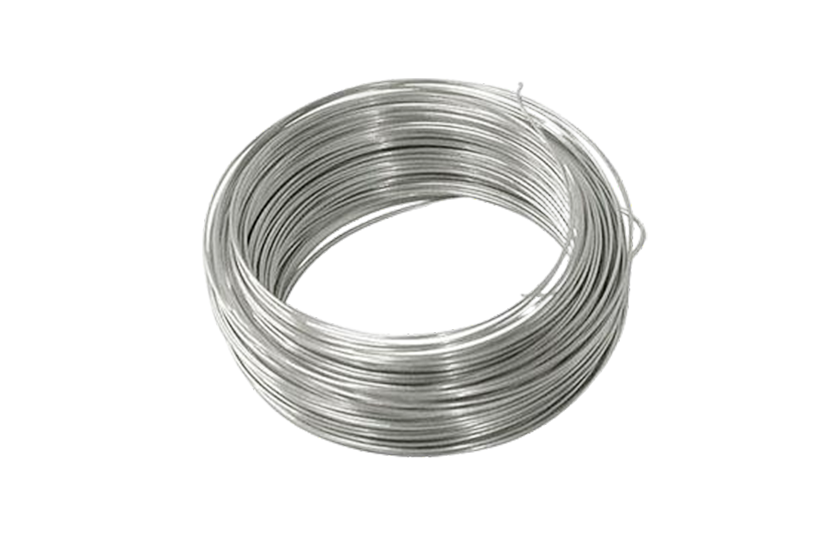
Alloy Steel Wire is a metal wire product manufactured from Alloy Steel Wire Rods through multiple processes, including cold drawing, annealing, quenching, and tempering.
Unlike ordinary carbon steel wire, alloy steel wire is produced by intentionally adding alloying elements such as chromium (Cr), manganese (Mn), vanadium (V), molybdenum (Mo), nickel (Ni), and silicon (Si) to the iron-carbon base material, improving strength, durability, wear resistance, corrosion resistance, and high-temperature performance.
Common materials include:
40Cr alloy steel wire
42CrMo alloy steel wire
65Mn spring steel wire
Cr-V spring steel wire
Includes:
Stainless steel wire
Nickel-based high-temperature alloy wire
Bearing steel wire
Bearing steel wire
Cold heading steel wire
Tool steel wire
Alloy welding wire
High-temperature alloy wire
2. Core Performance Advantages
Alloying elements such as manganese, chromium, and molybdenum significantly improve steel strength.
Tensile strength can reach 800–2000 MPa
Ordinary carbon steel wire usually ranges from 370–600 MPa
Under the same diameter, alloy steel wire provides higher load-bearing capacity, better tensile performance, and improved resistance to stretching and breakage.
Elements such as vanadium and chromium refine the internal grain structure of steel, improving fatigue resistance.
The wire can withstand repeated loading and bending without easily developing cracks, offering 2–5 times longer fatigue life than ordinary carbon steel wire.
Suitable for:
Springs
Steel wire ropes
Mechanical reciprocating components
Chromium, tungsten, and vanadium form hard carbides that improve surface hardness and wear resistance.
After heat treatment, alloy steel wire can be used for:
Cutting wires
Bearing steel balls
Tools
Wear-resistant screens
Mining wire ropes
Nickel, molybdenum, and chromium improve thermal stability, allowing the wire to maintain strength under high-temperature conditions.
Compared with carbon steel wire, alloy steel wire is less likely to soften or deform at elevated temperatures.
Applications include:
Engine components
Heat treatment furnaces
High-temperature springs
Welding filler wires
High-alloy stainless steel wires contain chromium, which forms a dense oxide protective film on the surface.
They provide excellent resistance against:
Water
Moisture
Acid and alkaline environments
Marine corrosion
Suitable for chemical, marine, and outdoor applications.
Proper alloy composition balances strength and ductility.
Alloy steel wire can be:
Cold headed
Bent
Woven
Drawn into finer diameters
It maintains impact resistance and reduces the risk of sudden breakage compared with high-carbon steel wire.
Small amounts of chromium and manganese improve hardenability, allowing steel wire to achieve uniform hardness throughout the cross-section.
This ensures:
Consistent mechanical properties
Stable product performance
Reliable service life
3. Main Applications of Alloy Steel Wire
Materials:
Cr-V spring steel wire
65Mn spring steel wire
Applications:
Automotive suspension springs
Valve springs
Mechanical shock absorber springs
Precision instrument springs
Advantages:
High elasticity
Excellent fatigue resistance
Long-term compression and recovery performance
Applications:
High-strength bolts
Rivets
Pins
Engineering machinery fasteners
Advantages:
Excellent cold heading performance
High load capacity
Strong impact resistance
Used in:
Automotive industry
Wind power equipment
Heavy machinery
Material:
GCr15 bearing steel wire
Applications:
Bearing balls
Rollers
Precision sleeves
Advantages:
High hardness
Excellent wear resistance
Superior contact fatigue resistance
Used in:
Machine tools
Motors
Gearboxes
Low alloy manganese steel wire is used for:
Steel wire ropes
Mining hoisting cables
High-voltage cable armor
Lifting slings
Advantages:
High tensile force
Wear resistance
Low elongation
Applications:
Mining equipment
Tower cranes
Cableways
High-carbon alloy cutting wire is used for:
Solar silicon wafer cutting
Sapphire cutting
Quartz multi-wire cutting
Advantages:
High tensile strength
Excellent wear resistance
High dimensional accuracy
Alloy welding wires are used for welding:
Alloy steel
Stainless steel
Heat-resistant steel
Applications:
Pressure vessels
Pipelines
Industrial equipment
Advantages:
Improved weld strength
Corrosion resistance
High-temperature resistance
Stainless alloy steel wire is used for:
Chemical filter screens
Marine aquaculture nets
Medical equipment
Outdoor protection mesh
Ship components
Advantages:
Rust resistance
Acid and alkali resistance
Nickel-based alloy wire is used for:
Aircraft engine springs
Gas turbine components
Heat treatment furnace heating wires
Advantages:
Maintains strength above 800℃
Excellent creep resistance
Oxidation resistance
Applications:
Wear-resistant brushes
Screening mesh
Tool blanks
Hydraulic component liners
Advantages:
Resists continuous friction from sand, stone, and materials
4. Alloy Steel Wire vs. Ordinary Carbon Steel Wire
| Performance | Alloy Steel Wire | Carbon Steel Wire |
|---|---|---|
| Strength | High, 800–2000 MPa | Lower, 370–600 MPa |
| Fatigue Life | Excellent, resistant to repeated bending | Limited, prone to cracking under long-term stress |
| Wear & Heat Resistance | Excellent | General, softens at high temperatures |
| Corrosion Resistance | Excellent for high-alloy grades | Easily rusts |
| Cost | Higher due to alloy materials and heat treatment | Lower |
| Applications | Heavy load, high temperature, corrosion, precision components | General binding, low-load applications, simple fencing |
High Strength Alloy Steel Wire is one of the key products developed and supplied by Henan Suxiang Steel Cable Co., Ltd. We focus on the research, production, and application of high-performance steel wire products, providing reliable solutions for customers who require high tensile strength, excellent durability, and stable performance in demanding working environments.
With years of experience in steel wire and steel cable manufacturing, we understand that different industries require different material performance. A wire used for lifting equipment, mining machinery, transportation systems, or engineering structures must not only carry heavy loads but also maintain strength after long-term use. This is why we developed high strength Alloy Steel Wire with optimized material composition, advanced processing technology, and strict quality control.
Our High Strength Alloy Steel Wire is designed for applications where ordinary steel wire cannot provide enough strength, wear resistance, or service life. By combining carefully selected alloy elements with precision manufacturing processes, our products offer excellent mechanical properties and reliable performance under complex conditions.
As a professional manufacturer of steel wire ropes, steel cables, phosphating steel wires, Galvanized Steel Wire Ropes, and spring steel wires, we provide complete material solutions from product selection to technical support. Our goal is not only to supply steel wire but also to help customers choose the right material according to their actual working environment.

High Strength Alloy Steel Wire is a specially engineered steel wire made from alloy steel materials. Compared with traditional carbon steel wire, alloy steel wire contains controlled amounts of elements such as manganese, silicon, chromium, nickel, or other alloying components. These elements improve the internal structure of the steel and enhance important properties including tensile strength, toughness, fatigue resistance, and wear resistance.
In simple terms, alloy steel wire is designed to be stronger and more stable than common steel wire. When used in heavy-duty applications, it can withstand higher loads while maintaining good flexibility and resistance to repeated stress.
The performance of High Strength Alloy Steel Wire mainly depends on several factors:
Steel chemical composition and alloy element ratio
Wire diameter accuracy and dimensional stability
Heat treatment technology
Cold drawing process
Surface treatment quality
Final mechanical property control
At Henan Suxiang Steel Cable Co., Ltd., we control these factors throughout the production process to ensure each batch meets customer requirements for strength, flexibility, and service life.
The working principle of High Strength Alloy Steel Wire is based on its optimized metallurgical structure and mechanical performance. During manufacturing, the steel wire undergoes controlled drawing, heat treatment, and surface processing to achieve a balanced combination of strength and flexibility.
When the wire is placed under tension, the internal structure helps distribute external forces evenly. This reduces the risk of sudden deformation or breakage during operation. In applications such as lifting systems, cranes, mining equipment, and industrial machinery, this stable force transmission capability is essential for safety and efficiency.
Unlike ordinary low-carbon steel wire, high strength alloy steel wire maintains better performance when exposed to:
Continuous pulling force
Repeated bending cycles
Heavy mechanical loads
High-frequency operation
Outdoor working environments
For example, in steel wire rope production, high strength alloy steel wire works as the basic load-bearing component. Multiple wires are combined through twisting and stranding processes to create steel cables with higher overall strength and improved flexibility.
The most important advantage of High Strength Alloy Steel Wire is its excellent tensile strength. Through alloy composition optimization and advanced processing technology, our steel wire can support higher loads compared with standard steel wire products of the same diameter.
High tensile strength means customers can achieve better load capacity while maintaining reasonable product size. This is especially important for equipment where space, weight, and safety are key considerations.
Many industrial applications require steel wire to work repeatedly for thousands or even millions of cycles. Continuous loading and unloading can cause material fatigue if the wire structure is not stable.
Our High Strength Alloy Steel Wire is manufactured with controlled mechanical properties to improve fatigue resistance. It performs well in applications involving repeated movement, vibration, and dynamic loads.
In mining, lifting, and transportation industries, steel wire products often contact pulleys, drums, and mechanical components. Surface wear can directly influence service life.
Alloy steel wire provides improved wear resistance through optimized material strength and surface treatment. This helps reduce replacement frequency and maintenance costs.
Precision is important for industrial Steel Wire Applications. Incorrect diameter or uneven surface quality may affect installation and equipment operation.
We use standardized production processes and inspection procedures to maintain consistent wire diameter, surface quality, and mechanical performance.

Different customers have different requirements for diameter, tensile strength, surface condition, and application environment. We provide customized High Strength Alloy Steel Wire solutions based on actual project requirements.
Our technical team can support customers with material selection, specification optimization, and production planning to achieve the best balance between performance and cost.
The following table shows typical performance ranges of high strength steel wire products. Actual values may vary depending on steel grade, diameter, and production requirements.
| Parameter | Typical Range | Industrial Importance |
|---|---|---|
| Tensile Strength | 1,570–2,160 MPa | Determines load-bearing capacity and safety performance |
| Diameter Range | 0.5–8.0 mm | Supports different application requirements |
| Surface Treatment | Bright, galvanized, phosphated, customized | Improves corrosion resistance and service life |
| Material Type | Alloy steel / Special steel grades | Provides enhanced mechanical properties |
Source: Technical references based on common Industrial Steel Wire standards including ASTM A228, ASTM A421, EN 10270, and customer-specific manufacturing requirements.
Modern industrial equipment continues to require higher efficiency, stronger materials, and longer service life. Whether used in construction machinery, lifting equipment, mining systems, or transportation infrastructure, material reliability directly affects operational safety and production efficiency.
Choosing the right High Strength Alloy Steel Wire helps companies reduce unexpected downtime, improve equipment performance, and lower long-term operating costs. A stronger wire does not simply mean higher strength; it means better balance between strength, flexibility, durability, and practical application performance.
At Henan Suxiang Steel Cable Co., Ltd., we continue improving our steel wire technology through research, manufacturing experience, and cooperation with industry partners. With multiple technology patents and participation in developing the group standard “Flexible Ultra-Wear-Resistant High-Tensile Steel Wire Rope,” we are committed to providing dependable steel wire solutions for global customers.
At Henan Suxiang Steel Cable Co., Ltd., we believe that product quality starts from the manufacturing process. High Strength Alloy Steel Wire is not simply produced by drawing ordinary steel into thinner wire. It requires careful material selection, controlled processing, and continuous inspection to achieve reliable mechanical performance.
Our production process combines traditional steel wire manufacturing experience with modern quality management methods. From raw material inspection to finished product delivery, every step is controlled to ensure stable tensile strength, consistent diameter, excellent surface condition, and long-term service performance.
The first step is selecting suitable alloy steel materials according to customer requirements. The chemical composition of steel directly affects strength, toughness, corrosion resistance, and fatigue performance.
Before production, we check incoming steel materials through professional testing methods. Important factors include chemical composition, surface quality, internal structure, and material consistency. Only qualified materials can enter the next production stage.
Wire drawing is one of the most important processes for producing High Strength Alloy Steel Wire. During this process, steel rods pass through specially designed dies to gradually reduce diameter and improve dimensional accuracy.
Controlled cold drawing increases the strength of the steel wire by improving the internal grain structure. At the same time, precise drawing control helps maintain uniform diameter and smooth surface quality.
Our engineers adjust drawing parameters according to different wire specifications, including drawing speed, reduction ratio, and lubrication conditions. This ensures the final product achieves the required balance between strength and flexibility.
Heat treatment plays an important role in improving the mechanical properties of alloy steel wire. Proper heat treatment can optimize the internal structure of the steel and improve toughness, fatigue resistance, and overall durability.
Through controlled heating and cooling processes, we help High Strength Alloy Steel Wire achieve stable performance under demanding working conditions.
Depending on the application environment, High Strength Alloy Steel Wire can be supplied with different surface treatments, including bright surface, galvanized coating, and phosphating treatment.
Surface treatment helps improve corrosion resistance and enhances the compatibility between steel wire and other materials. For outdoor equipment, marine applications, and heavy industrial environments, proper surface protection can significantly extend service life.
Before shipment, every production batch undergoes inspection procedures to verify key performance indicators. These checks may include tensile strength testing, dimensional measurement, surface inspection, and appearance evaluation.
After approval, finished products are carefully packed using protective methods designed for steel wire coils and cable materials. We use moisture-resistant and anti-impact packaging solutions to reduce damage risks during transportation.
Due to its high strength, durability, and reliable performance, High Strength Alloy Steel Wire is widely used in industries that require safe and stable load transmission. Our products support customers in multiple fields, including construction, mining, transportation, machinery manufacturing, energy, and industrial equipment.
In construction projects, steel wire products are often required for suspension systems, lifting equipment, structural support, and engineering machinery. High Strength Alloy Steel Wire provides excellent load-bearing capability while maintaining flexibility during installation and operation.
For large-scale projects, material reliability is especially important because equipment failure may cause safety risks and production delays. Strong and stable steel wire helps improve construction efficiency and operational safety.
Mining environments create extremely demanding conditions. Equipment often works under heavy loads, continuous vibration, dust, and mechanical impact.
High Strength Alloy Steel Wire is suitable for mining lifting systems, hoisting equipment, and steel cable production because of its excellent fatigue resistance and wear resistance.
Cranes, elevators, port machinery, and logistics equipment require steel wire materials that can withstand repeated loading cycles.
Our alloy steel wire helps improve equipment reliability by providing stable strength performance during frequent operation.
Many mechanical systems require precision steel wire components. Applications include springs, control systems, transmission components, and customized industrial parts.
The stable mechanical properties of High Strength Alloy Steel Wire make it suitable for manufacturers who need consistent material performance.
With the development of renewable energy and modern industrial systems, equipment manufacturers require stronger and more durable materials.
High Strength Alloy Steel Wire can be used in supporting structures, mechanical transmission systems, and specialized equipment where reliability is critical.
Different steel wire materials have different advantages. Choosing the correct type depends on application requirements, working environment, and expected service life.
| Comparison Item | High Strength Alloy Steel Wire | Standard Carbon Steel Wire |
|---|---|---|
| Tensile Strength | Higher strength level, suitable for heavy loads | Suitable for general applications |
| Fatigue Resistance | Excellent performance under repeated stress | Moderate resistance |
| Wear Resistance | Improved for demanding environments | Lower in harsh conditions |
| Service Life | Longer replacement cycle in heavy-duty applications | Shorter under high stress conditions |
Source: Comparison based on general industrial material characteristics from ASTM steel wire specifications and engineering application data.
Quality control is a core part of our manufacturing philosophy. We understand that customers do not only purchase steel wire; they purchase reliability, safety, and stable supply capability.
Our quality management covers the complete production chain:
Incoming raw material inspection
Chemical composition analysis
Production process monitoring
Mechanical performance testing
Surface quality inspection
Final product verification before shipment
We have established a technical development system with Jiaozuo Vocational College of Advanced Materials and continuously improve our products through research and manufacturing innovation.
With 10 technology patents, including 1 invention patent, and participation in the development of the group standard “Flexible Ultra-Wear-Resistant High-Tensile Steel Wire Rope,” we continue to strengthen our technical capabilities in high-performance steel wire solutions.
Choosing a steel wire supplier means choosing a long-term manufacturing partner. At Henan Suxiang Steel Cable Co., Ltd., we focus on providing stable products, professional technical support, and flexible supply solutions.
We specialize in steel wire ropes, steel cables, phosphating steel wires, Galvanized Steel Wire ropes, spring steel wires, and customized steel wire products. Our experience allows us to understand different industry requirements and provide suitable solutions.
Every project has different requirements. We support customized specifications based on diameter, strength grade, surface treatment, application environment, and delivery requirements.
Our team works with customers to optimize product selection and provide practical solutions instead of simply supplying standard products.
We maintain standardized production management and flexible scheduling systems. Common specifications can be prepared quickly, while customized products can be organized according to confirmed technical requirements.
We also provide professional packaging and logistics solutions, including moisture protection, anti-tangle protection, and transportation optimization for steel wire coils.
High Strength Alloy Steel Wire is mainly used in applications requiring high load capacity, durability, and fatigue resistance, including steel wire ropes, lifting equipment, mining machinery, construction systems, springs, and industrial components.
Alloy steel wire contains controlled alloy elements that improve strength, toughness, fatigue resistance, and durability. Compared with ordinary steel wire, it performs better under heavy loads and harsh working conditions.
Yes. We provide customized solutions according to customer requirements, including diameter, mechanical properties, surface treatment, packaging, and application specifications.
We control quality throughout the production process, including raw material inspection, manufacturing monitoring, mechanical testing, and final inspection before delivery.
We combine manufacturing experience, technical innovation, strict quality control, and flexible customer service to provide reliable High Strength Alloy Steel Wire and steel cable solutions for global markets.
If you are looking for a reliable High Strength Alloy Steel Wire manufacturer, Henan Suxiang Steel Cable Co., Ltd. can provide professional material solutions for your project. Contact us for product specifications, technical support, and customized supply plans.
 RELATED

 Landline Phone: +86-513-85100011
Telephone: +86 13585223056
 E-mail: hangtong@nthangtong.com
vicky@nthangtong.com
 Address: No. 508, Guangxing Road, Baishan Town, Bo'ai County, Jiaozuo City, Henan Province
Copyright © Henan Suxiang Steel Cable Co., Ltd
This website uses cookies to ensure you get the best experience on our website.
 Español
 한국어
한국어 العربية
 Tiếng Việt
 Filipino



 Phone
Phone