

The certificate wall in a supplier's reception tells a buyer almost nothing â except which certificates the supplier thought buyers want to see. Certifications earn their place in a decision only when their scope, their issuing body and their audit depth survive examination. This guide shows hot-dip galvanized Steel Wire buyers how to read certificates for substance instead of wallpaper.
Validation is the manufacturing world's quietest discipline: nothing about it photographs well, no certificate frames elegantly, and yet the difference between a validated process and an unvalidated one is the difference between reproducible quality and fortunate quality. The paperwork is bureaucratic precisely because the stakes are systematic.
This guide explains how steel wire and cable products is tested, which standards apply, what certification actually proves, and how buyers can verify quality before, during and after production. It reflects the practices at æ²³åèç¿é¢ç¼æéå ¬å¸ (www.suxiangsteelcable.com).
Suppliers make broad quality claims. These are the specific questions that turn a claim into evidence.
Which standard, exactly? Ask for the standard number, not a general assurance.
Who issued the certificate? Recognised third-party bodies carry more weight than self-declarations.
What is the scope? A certificate may cover only part of the product range.
Is it current? Check validity dates and renewal status.
What is the incoming inspection protocol? Ask for the checklist and sampling plan.
What happens when a defect is found? A defined corrective process matters more than a zero-defect promise.
A quality management system (QMS) is the documented set of processes that control how a product is made, inspected and released. Certification such as ISO 9001 confirms that the system exists and is audited; it does not by itself guarantee product quality, but it makes quality repeatable.
Incoming material control: verifying raw materials against specification before use.
In-process control: checking parameters and dimensions during production.
Final inspection: verifying finished goods before packing.
Corrective action: investigating and fixing root causes of defects.
Buyers should treat a QMS as a foundation. On its own it is necessary but not sufficient; it must be paired with genuine product testing.
Different products require different tests, but the categories are consistent across manufacturing:
| Test Category | What It Verifies | Typical Method |
|---|---|---|
| Dimensional | Size and tolerance | Caliper, gauge, CMM |
| Functional | Performance under load | Bench and endurance testing |
| Material | Composition and grade | Spectrometry, certificate review |
| Safety | Compliance with standards | Type testing, Hipot, pressure test |
| Environmental | Resistance to conditions | Humidity, temperature, salt spray |
Ask which of these are performed routinely and which only on request. A factory that tests every batch is fundamentally different from one that tests only the first sample.
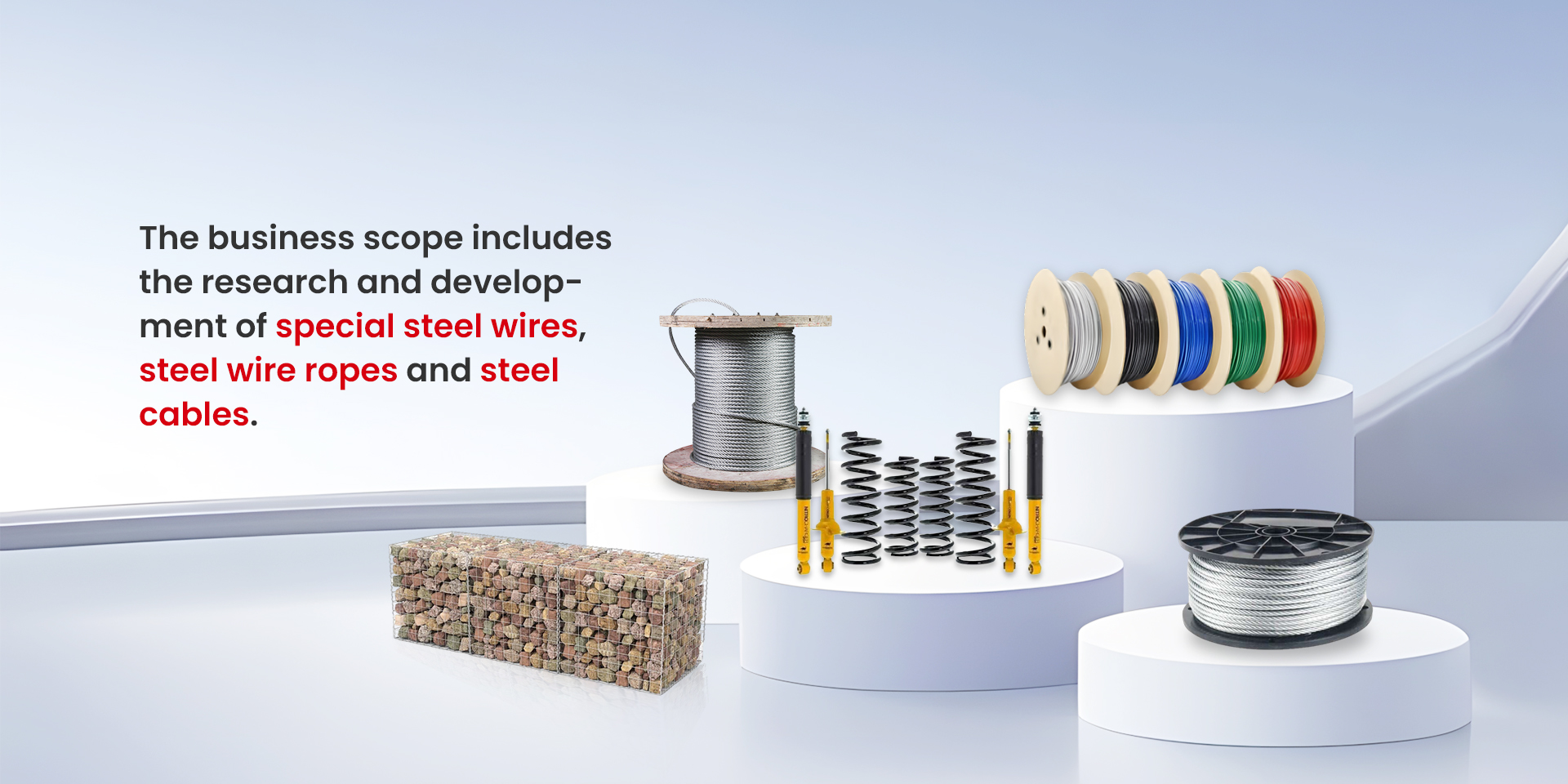
Certification confirms that a product or process has been assessed against a standard by an accredited body. It is a valuable signal, but it is not a guarantee of every unit.
Proves: the tested sample complied with the standard at the time of testing.
Does not prove: that every production unit complies, or that the factory maintains the same process over time.
Best practice: combine certification with routine batch testing and periodic re-verification.
For steel wire and cable products, the relevant certifications typically include ISO 9001, ASTM A475, EN 10244. Confirm the scope of each certificate covers the exact product you are buying.
A simple incoming inspection protocol is the buyer's last line of defence. It is inexpensive and catches the majority of problems before they reach customers.
Sample the shipment according to a defined plan (for example, per pallet or per batch).
Measure the key specification parameters and record the results.
Functionally test a representative subset.
Verify labelling, packaging and documentation against the approved artwork.
Document results by batch number and raise trends with the supplier.
Reject or negotiate remedies for any lot that fails the criteria.
Keep the data. A buyer who can show three months of measured results has far more leverage in a quality conversation than one who reports only that a batch felt wrong.
Understanding why quality varies helps buyers ask better questions.
Raw material substitution: lower-grade material used to reduce cost.
Tool wear: moulds and dies degrade and produce out-of-tolerance parts over time.
Process drift: settings change without documentation.
Operator variation: manual steps introduce inconsistency.
Sub-supplier quality: components from third parties may not meet the same standard.
A factory that monitors these factors proactively prevents most defects before they occur.

Put quality terms in the contract, not just in conversation. Specify the standard, the sampling plan, the acceptance criteria, the remedy for non-conformance, and the documentation you expect with each shipment.
This protects both sides. The supplier knows exactly what is expected, and you have a defined basis for discussion if something goes wrong.
Recurring quality management means tracking a small set of metrics rather than reacting to individual complaints.
| Metric | What It Measures | Target | Action If Breached |
|---|---|---|---|
| Defect rate | Share of units failing inspection | < 1% | Investigate root cause with supplier |
| On-time delivery | Shipments meeting the agreed date | > 95% | Review capacity and planning |
| First-pass yield | Units passing without rework | > 98% | Analyse process weak points |
| Warranty claim rate | Field failures under warranty | < 2% | Reassess design and testing |
| Documentation accuracy | Correctness of shipping paperwork | 100% | Tighten release checklist |
Track these monthly and review them with the supplier quarterly. A small set of well-understood metrics beats a large set of ignored reports.
The applicable standards depend on your destination market and product category. These are the ones most commonly requested.
ASTM A475: verify the factory can supply the current certificate and that its scope covers your product.
EN 10244: verify the factory can supply the current certificate and that its scope covers your product.
GB/T 343: verify the factory can supply the current certificate and that its scope covers your product.
ISO 9001: verify the factory can supply the current certificate and that its scope covers your product.
ISO 9001: request the certificate and confirm validity.
ASTM A475: request the certificate and confirm validity.
EN 10244: request the certificate and confirm validity.
This is the workflow that turns a quality policy into shipped quality.
Approve the specification and the golden sample in writing.
Verify incoming materials against certificates.
Control in-process parameters and record them.
Run functional and safety tests at defined intervals.
Perform 100% or AQL final inspection before packing.
Complete a pre-shipment inspection with photographic records.
Archive the batch documentation for traceability.
Feed field performance back into design and process improvement.
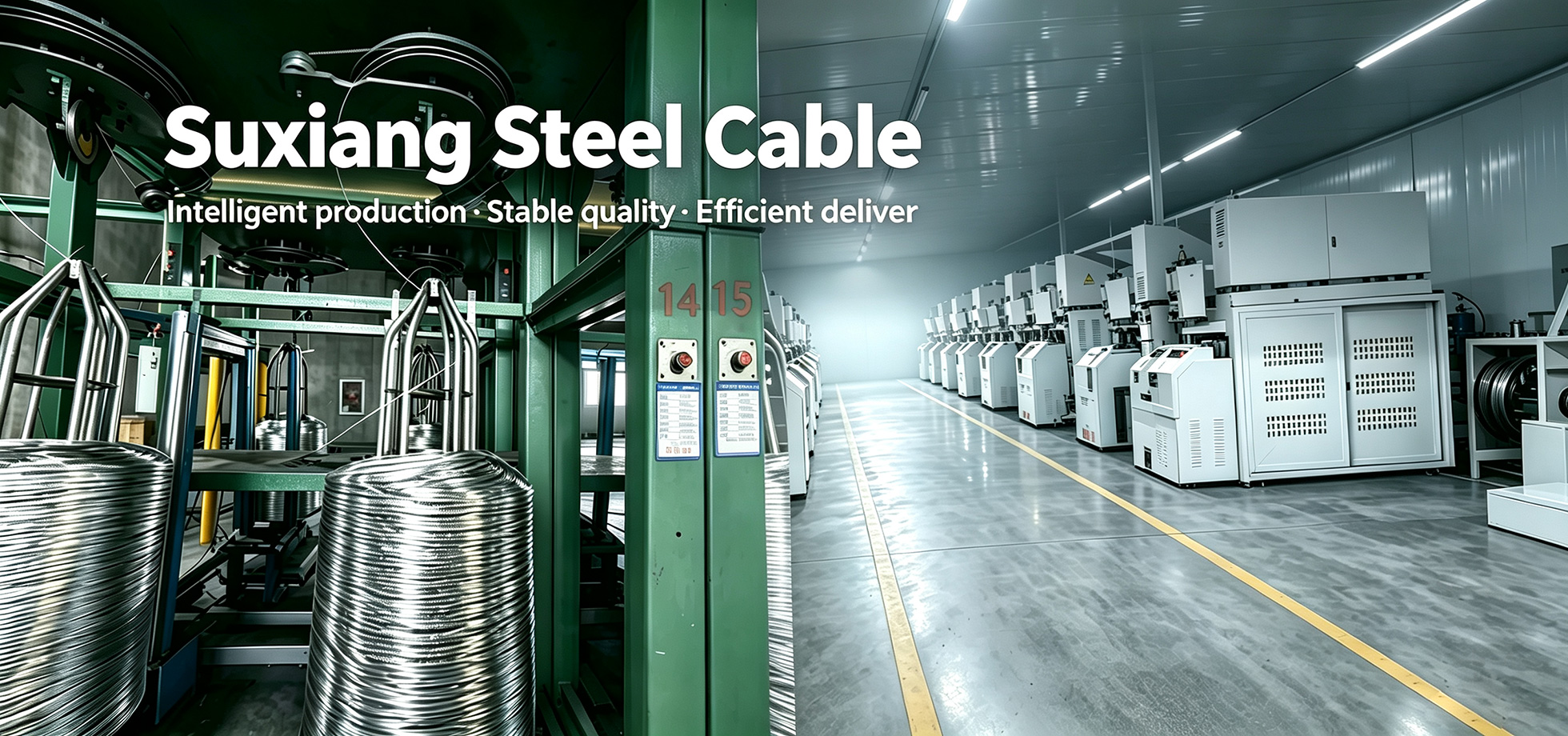
Reading certificates for substance, layer by layer:
| Certificate Layer | What Substance Looks Like | Where the Wallpaper Starts |
|---|---|---|
| Scope of the certificate | Names the exact product, the standard and its year, and the factory address â all matching your order | 'ISO 9001 certified' with no scope statement, an outdated standard revision, or a group certificate covering a different site |
| Issuing body | An accredited body with a registry entry you can independently find | A body nobody has heard of, or an accreditation in a jurisdiction chosen for its leniency |
| Validity and surveillance | Current expiry date, surveillance audit dates, and the certificate's own history visible | A certificate dated years ago with no surveillance trail â issued once, displayed forever |
| Test reports behind it | Reports traceable to real samples: sample photos, serials, dates, signed by a named engineer | A single-page summary with a pass mark and no traceability â the report verifies nothing but the printer |
| Relevance to your risk | The certified characteristics overlap the ones that drive your application's failures | A wall of impressive certificates covering everything except the property your product actually needs |
The verification habit costs an hour per shortlisted supplier and changes the reading of everything else: registry lookup for the issuing body, a scope match against your order's product and factory, a call or email to confirm the certificate's standing, and traceability checks on the reports that matter to your application. Suppliers with substance welcome the checks â their paperwork is their argument, and they rarely get asked to show the chain. Suppliers with wallpaper stall, defer, or produce fresh single-pagers â each response itself the finding. And the habit scales: once a buyer has verified ten certificates, the fake ones announce themselves from across the room, in the same way a banknote verifier stops counting and simply sees.
A certificate confirms compliance with a standard following assessment by an accredited body. A test report records the results of specific tests. Both are useful; the certificate is a higher-level signal, while the report gives detail.
ISO 9001 confirms that a documented quality management system is in place and audited. It makes quality repeatable but does not by itself guarantee a specific product's performance. Combine it with product testing.
Most buyers re-audit annually, or more often if the supplier is new, critical, or has had recent quality issues. Periodic third-party testing complements internal audits.
Document the failure with evidence, notify the supplier formally, and agree a remedy â rework, replacement, credit or return. Track the resolution to confirm the root cause is fixed.
Yes, and it is good practice. Many buyers appoint a third-party inspection company to verify goods before they leave the factory.
It depends on the market: CE for the EU, UL or ETL for North America, and specific standards for food, medical or electrical applications. Confirm the requirement for your destination before ordering.
Check the issuing body's database, confirm the certificate number, scope and validity, and ensure the product in question is covered.
Broadly, yes â but not perfectly. A structured audit and batch testing reveal real quality differences that price alone cannot.
Most procurement control failures are not fraud or incompetence â they are ambiguity: nobody agreed in advance who may sign what, so whoever was standing closest decided. The delegation matrix removes the ambiguity on one page:
Tiers by commitment size, not by job title alone: thresholds stated in currency â below one line, the buyer decides; above it, the manager; above that, the committee â because 'significant' is not a threshold, it is an argument.
Types of commitment treated separately: orders, change orders, claims settlements, contract terms, supplier appointments â a buyer trusted with routine orders is not thereby trusted to settle a claim or accept a substitution, and the matrix says so in writing.
Deputies named for every absence: authority that disappears when someone travels is authority that gets improvised at the airport â each tier carries a named deputy with the same limits.
Escalation routes with time bounds: who decides when the decision-maker is unreachable, and within how many hours â because supply chains run on weekends and holidays, and the matrix must survive both.
An annual review, with reality checked against the paper: who actually signed what last year â a matrix that no longer matches behaviour is either ignored or obeyed, and one of those two is a problem.
The matrix's value appears at the worst moments: the rush order at Friday night, the supplier demanding a decision at the loading dock, the claim that could settle now for a figure nobody is sure they may accept. In organisations with the matrix, those moments take minutes; in organisations without, they take escalations, and escalations take days the supply chain does not have. The document also protects the people it names: a buyer acting inside written authority is never explaining a decision after the fact, and the explanation-proof organisation moves faster precisely because its people stop defending themselves. One page, reviewed yearly, signed by leadership â the cheapest governance a procurement function can buy.

Validation language intimidates buyers into accepting summaries. The three stages, stripped of alphabet soup:
| Stage | The Question It Answers | Evidence a Real One Contains |
|---|---|---|
| Installation Qualification (IQ) | Is the equipment installed as designed â right site, right utilities, right components | Installation records, utility verifications, component and calibration inventories, drawing and manual revision checks |
| Operational Qualification (OQ) | Does the equipment operate across its intended ranges â limits tested, alarms proven | Challenge tests at high and low parameter bounds, alarm and interlock tests, signed protocols with pass criteria stated in advance |
| Performance Qualification (PQ) | Does it reliably produce good product under normal production conditions | Consecutive production runs at normal settings, sampled against the acceptance criteria, repeated across shifts or days |
The three stages are cumulative on purpose: installation errors are cheap to fix and expensive to discover at PQ, so the sequence catches each class of problem where it is youngest. For a buyer, the practical requests are proportionate to the risk â for standard products, the supplier's existing validation package for the process in question, with the PQ runs sampled against the characteristics that matter to your application; for custom work, the protocol agreed as part of the order, with the criteria written before the runs rather than after. The warning sign is compression: a 'validation' that is a single signed page asserting all three stages passed tells you the factory has heard of validation, not that it practises it. Real packages are boring, dated, signed by named people, and slightly embarrassing in their detail â which is exactly why they are worth more than their weight in certificates.
The lab is where a factory's quality claims become measurements, or fail to. The walk-through that reads it honestly:
Check the calibration stickers, then check the records: gauges with expired stickers are the classic finding; gauges with fresh stickers and no calibration certificates behind them are the subtler one.
Ask for the standard behind the main test: the physical copy on the shelf, the current edition, with its purchase date â labs running on a photocopy of a 2003 edition are testing to a world that no longer exists.
Watch one test performed, start to finish: the operator's fluency, the fixture's condition, the data's path from instrument to record â one observed test outperforms any folder of reports.
Ask who can overrule a result: the answer reveals the lab's actual position in the factory â an independent quality lab reports its failures upward even when unwelcome; a lab serving production finds ways to agree with production.
Look at the retention samples and their labels: dated, labelled, organised retention samples mean the factory keeps its history; a shelf of anonymous boxes means the factory keeps its furniture.
The walk-through's efficiency is its cruelty: in one hour it verifies the entire chain from instrument to record to decision, the chain that certificates summarise and conceal. Factories with real labs pass it easily and enjoy the visit â a functioning lab is expensive, rare and deserves an audience. The findings that matter most are small: the sticker dates, the standard's edition, the overrule question answered with a pause. Buyers should run the walk-through before the first order on every supplier whose claims depend on test data, and repeat it yearly on the suppliers whose volume makes their data your documentation. The alternative is buying quality reports the way tourists buy postcards: attractive, stamped, and unconnected to the place they claim to show.
The pre-mortem inverts planning: before the order is placed, the team assumes the project has failed and writes the history of why. The discipline that makes it work:
Set the scene honestly: 'it is eighteen months from now and this sourcing programme is a disaster' â the framing gives everyone permission to say what politeness otherwise suppresses.
Collect the failure stories privately first, then reveal: written independently before discussion, the lists stay independent â group-first pre-mortems converge on the loudest person's two fears and miss the other eight.
Sort the causes into kinds: supplier-caused, buyer-caused, market-caused, plan-caused â the sorting matters because each kind has a different owner and a different preventive instrument.
Assign a prevention to each plausible cause, or accept it consciously: every fear ends in one of two states â a named action with a date, or a documented acceptance with a reason; the unacceptable middle is a fear nobody wrote down.
Re-read the pre-mortem at the mid-point: the document's second life is as a checklist of what to watch â programmes that revisit it catch their predicted failures young, which is the only way anyone catches anything young.
The pre-mortem's power comes from timing: it is the only risk exercise that runs while the organisation can still change its plan cheaply. Audits look backward, reviews look at the present, and the pre-mortem is the one instrument aimed at the future â which is why it costs an hour and routinely finds what a month of diligence misses: the single factory, the optimistic lead time, the assumption that the old contact still works there. Programmes that institutionalise it also change their culture in a quiet way: fear becomes data. The worries that once lived in corridor conversations become written, sorted, owned and either prevented or accepted â which is, in the end, the entire discipline of procurement stated as a meeting format.
Every procurement team runs on knowledge that lives in exactly one head â and loses it on exactly the day that head resigns. The knowledge base is the fix, built to be maintained:
Structure it by question, not by department: 'how we qualify a supplier', 'how a claim runs', 'who approves what' â people search questions, not org charts, and the structure that matches the search gets used.
Write from the last incident, not from theory: the best entries are post-mortems of real events â the claim that succeeded, the onboarding that stalled â because specific beats general in every inbox it will ever rescue.
Attach the artefacts: the actual RFQ template, the actual claim letter that worked, the actual checklist â a knowledge base of prose is a library; a knowledge base of templates is a tool.
Set a maintenance rule small enough to survive: one entry per month, owned by rotation â knowledge bases die of ambition; they survive on a cadence an intern could keep.
Measure it by reuse, not by size: a twenty-page base that nobody consults is a filing exercise; a two-page base that settles arguments weekly is the real asset.
The base pays its clearest dividend at transitions: the new buyer who inherits a functioning base is productive in weeks rather than quarters, and the organisation stops paying the resignation tax â the quiet, enormous cost of re-learning what one departing person knew. It pays a subtler dividend internally: writing forces the precision that conversation forgives, and teams that document their practices discover disagreements they did not know they had â two buyers running two different claims processes, both certain theirs was policy. The knowledge base is where the organisation finds out what it actually believes, which makes it less a filing system than a mirror â and among the cheapest mirrors a procurement function will ever own.

Buyers usually learn by collision â with a bad contract, a failed supplier, a crisis at the dock. A deliberate path replaces some collisions with lessons:
Start in the factory, not in the office: the first month is spent where goods are made and received â the buyer who has watched material arrive, get inspected, get used and occasionally fail writes specifications and judges claims differently forever.
Apprentice on live files, with real authority growing: new buyers take ownership of small orders immediately â with a senior reviewing before release, then sampling, then only at milestones â because authority that arrives gradually is used confidently.
Teach the instruments in the order they fail: claims first, then specifications, then negotiation, then strategy â the curriculum that starts where the mistakes bleed teaches fastest.
Rotate through the disputes: a stretch handling claims and quality issues inoculates a buyer against the optimism that causes them â nobody who has processed a bad claim buys the way they did before.
Close the loop with the knowledge base: each trainee's hardest lesson becomes the next entry â the training path feeds the base, and the base trains the next trainee, which is how a team compounds.
The path's economics are quietly compelling: a buyer's first two years are usually spent making the mistakes the organisation has already paid for elsewhere, and a structured path recovers a meaningful fraction of that tuition. But the deeper return is cultural â teams that train deliberately develop a shared standard of what good looks like, and standards are what make a procurement function something more than a collection of individual styles. The path also signals, to the trainees and the market, that the organisation takes the craft seriously â which is, over a career, the difference between buyers who leave for development and buyers who stay because they are developing.
Size matters as fit, not as rank. A factory whose capacity makes your order two percent of its output will price you well and schedule you last â not from malice, but because arithmetic allocates attention. The safer unit of analysis is the share: many programmes run best at suppliers where they represent a meaningful slice of capacity and a name the management knows. Very large factories earn their place when volumes are huge or audits are brutal; small and mid-size factories often outperform on flexibility, attention and senior access. The mistake is not choosing either â it is choosing by impression instead of by share.
Four checks, one hour: confirm the issuing body's accreditation through its registry; match the certificate's scope â product, standard version, factory address â against your order; confirm current validity and surveillance-audit dates with the issuer; and for test reports, trace the samples â photos, serials, dates, a named engineer. Genuine suppliers pass this easily and appreciate it; the wallpaper producers stall, and the stalling is the answer. The habit pays compounding interest: after a dozen verifications, a buyer recognises the counterfeit texture on sight.
For steady importers, usually yes â and the arithmetic takes minutes: annual duty volume times the deferral period is the float the scheme creates free, against a one-time registration and modest compliance obligations. Periodic declaration regimes add administrative savings at high entry counts, and suspension or end-use reliefs can be worth far more than cash-flow float where the goods qualify. The screening questions are entry volume, clean compliance record, and a broker who has actually run the scheme before. Importers who have never examined their inherited payment habit are often surprised which camp they fall into.
Five checkable facts replace the promise of 'excellent support': where the nearest engineer is based and the recorded response times on your lane; which spares are stocked regionally versus shipped from origin; what the warranty actually pays for, exclusions read aloud; who answers the support line and when; and two or three regional references you may call. Score bidders on the same five dimensions â service organisations differ far more than machines do. Then make one unbriefed reference call and ask what happened the last time the machine failed: who came, how fast, with what, and what it cost. Two minutes of answer that outweigh the whole brochure.
Size from history: last cycle's actual variance on the same lane, supplier and product is the honest basis â usually one to three days at each of the two or three riskiest joints, the handoffs where delays concentrate. Protecting the buffer is procedural, not heroic: name it in the plan, defend it in writing from the teams who volunteer to 'reclaim' it, and record every delay it absorbs. The record is the argument that keeps it funded â a buffer with a history of absorbed delays is a paid insurance policy; unnamed slack is merely a donation to the next optimist with a red pen.
If you want to see how quality is controlled in practice, æ²³åèç¿é¢ç¼æéå ¬å¸ (www.suxiangsteelcable.com) is happy to share inspection records, test reports and certification for our steel wire and cable products. Visit www.suxiangsteelcable.com to learn more and request documentation for your market.

 Landline Phone: +86-513-85100011
Telephone: +86 13585223056
 E-mail: hangtong@nthangtong.com
vicky@nthangtong.com
 Address: No. 508, Guangxing Road, Baishan Town, Bo'ai County, Jiaozuo City, Henan Province
Copyright © Henan Suxiang Steel Cable Co., Ltd
This website uses cookies to ensure you get the best experience on our website.
 Español
 한국어
 العربية
 Tiếng Việt
 Filipino



 Phone
Comment
(0)