

Gabion Mesh and Welded Wire Mesh are two widely used wire-based engineering materials with different structures, performance characteristics, and application fields. Understanding the differences between Gabion Mesh and Welded Wire Mesh helps engineers, contractors, and buyers select the most suitable solution for construction, erosion control, soil stabilization, and protection projects.
Although both Gabion Mesh and Welded Wire Mesh are manufactured from Steel Wire, their designs and functions are significantly different. Gabion Mesh is mainly used as a flexible protective structure filled with stones, while Welded Wire Mesh is commonly used as a rigid reinforcement material. The differences between Gabion Mesh and Welded Wire Mesh determine their advantages and applications in different environments.
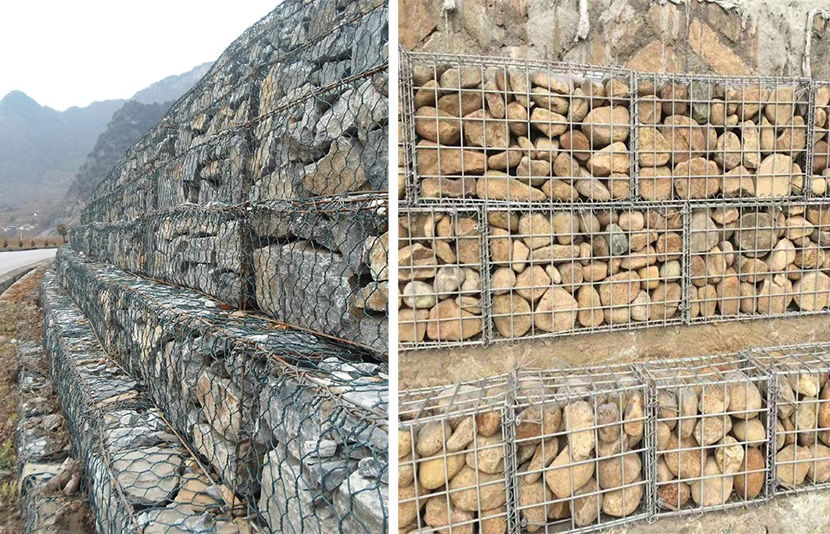
Gabion Mesh is a flexible wire mesh structure designed to create cages or containers that are filled with stones, rocks, or other suitable materials. The Gabion Mesh structure is usually manufactured with double twisted hexagonal wire mesh, which provides excellent flexibility and mechanical strength.
The main advantage of Gabion Mesh is its ability to adapt to ground movement and environmental changes. Because each section of Gabion Mesh can move slightly while maintaining structural integrity, it is highly suitable for riverbank protection, slope stabilization, retaining walls, and erosion control applications.
Gabion Mesh combines the strength of steel wire with the natural stability of stone materials. The stone-filled Gabion Mesh system creates a heavy protective structure that can resist water impact, soil movement, and external pressure.
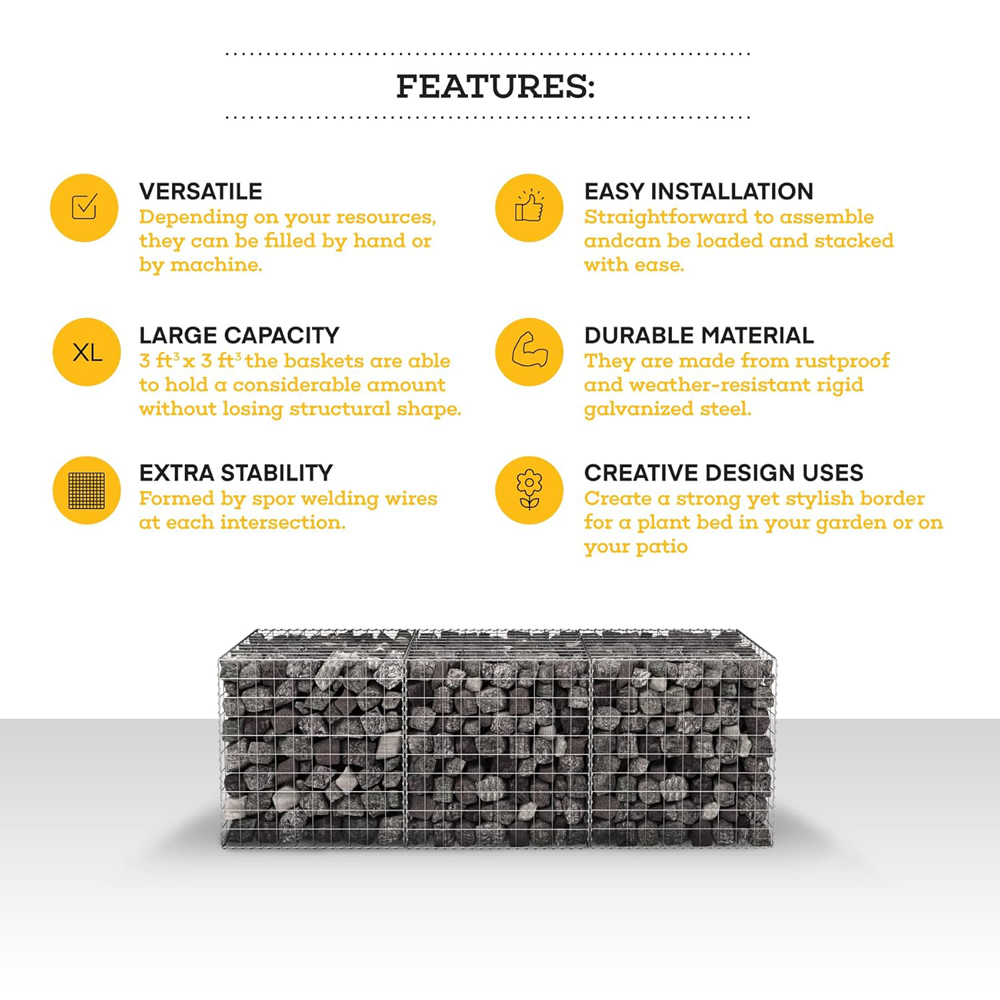
Welded Wire Mesh is a rigid wire structure made by welding steel wires together at fixed intersections. Unlike Gabion Mesh, which uses flexible woven connections, Welded Wire Mesh creates a stable and uniform grid structure.
The main feature of Welded Wire Mesh is its high dimensional accuracy and strong structural consistency. Because each wire intersection is welded, Welded Wire Mesh provides excellent rigidity and is often used for reinforcement, fencing, concrete support, and industrial applications.
Welded Wire Mesh is suitable for projects that require a fixed shape and stable framework. However, compared with Gabion Mesh, Welded Wire Mesh has less flexibility when dealing with ground settlement or uneven movement.
The most important difference between Gabion Mesh and Welded Wire Mesh is their manufacturing structure. Gabion Mesh uses a double twisted weaving method, allowing the mesh structure to absorb deformation and movement. Welded Wire Mesh uses welded joints that create a stronger but more rigid framework.
Gabion Mesh is designed to work together with filling materials such as stones. The combination of wire mesh and stones creates a complete protection system. Welded Wire Mesh usually functions as a reinforcement layer or barrier without requiring additional filling materials.
Another difference between Gabion Mesh and Welded Wire Mesh is flexibility. Gabion Mesh can adjust to changes in soil conditions, water flow, and foundation movement. Welded Wire Mesh maintains a fixed shape and provides stable reinforcement where deformation is limited.
Gabion Mesh offers several advantages that make it suitable for challenging outdoor environments. One of the most important advantages of Gabion Mesh is flexibility. The mesh structure allows movement without losing overall stability, making it effective for natural terrain and changing conditions.
Another advantage of Gabion Mesh is excellent drainage performance. The gaps between stones inside Gabion Mesh allow water to pass through naturally, reducing water pressure and improving soil stability.
Gabion Mesh also provides strong erosion resistance. In riverbank protection applications, Gabion Mesh reduces the impact of flowing water and protects soil from being washed away.
Flexible structure for uneven ground conditions
Excellent drainage capability
Strong erosion control performance
Long service life in outdoor environments
Suitable for ecological engineering applications
Welded Wire Mesh provides advantages in applications requiring rigid reinforcement and precise dimensions. Because the wire intersections are welded, Welded Wire Mesh maintains a consistent shape and offers reliable mechanical strength.
One important advantage of Welded Wire Mesh is easy installation. The flat panel structure allows quick positioning and connection during construction projects.
Welded Wire Mesh is also widely used where a strong framework is needed. It can provide reinforcement support for concrete structures, industrial barriers, and various construction applications.
High structural rigidity
Accurate mesh dimensions
Easy installation process
Strong reinforcement capability
Suitable for fixed structural applications
The applications of Gabion Mesh and Welded Wire Mesh are determined by their structural characteristics and performance advantages. Gabion Mesh is mainly used in projects that require flexibility, erosion protection, and environmental adaptation. Welded Wire Mesh is commonly selected for projects requiring rigid reinforcement, fixed structures, and dimensional accuracy.
Gabion Mesh is widely applied in riverbank protection projects because it can resist water impact while allowing natural drainage. River channels, flood control systems, embankments, and coastal protection projects often use Gabion Mesh because the flexible structure can adapt to changing water conditions and soil movement.
In slope protection applications, Gabion Mesh helps prevent soil erosion and improve slope stability. The stone-filled Gabion Mesh structure provides weight support and reduces the risk of landslides. This makes Gabion Mesh suitable for highways, railways, hillside protection, and infrastructure projects located in unstable areas.
Welded Wire Mesh has different application advantages. Because of its rigid structure, Welded Wire Mesh is commonly used in concrete reinforcement, construction panels, protective barriers, industrial partitions, and security applications. The welded connections provide a stable framework where movement is limited.
Gabion Mesh applications cover a wide range of civil engineering and environmental projects. The unique combination of flexibility, strength, and drainage makes Gabion Mesh an effective solution for many outdoor protection requirements.
Riverbank protection and water erosion control
Soil stabilization and slope reinforcement
Retaining walls and earth support structures
Flood protection and channel reinforcement
Coastal protection and shoreline defense
Landscape engineering and ecological restoration
Road and railway slope protection
In ecological projects, Gabion Mesh provides advantages because it can integrate with natural surroundings. Plants can grow around the stone-filled Gabion Mesh structure, creating a balance between engineering protection and environmental improvement.

Welded Wire Mesh applications focus mainly on reinforcement and structural support. The rigid welded structure makes Welded Wire Mesh suitable for projects where strength and precise shape are important.
Concrete reinforcement systems
Construction support structures
Industrial safety barriers
Machine protection fences
Animal enclosure systems
Storage and security applications
Compared with Gabion Mesh, Welded Wire Mesh performs better in applications requiring a flat and stable framework. However, Welded Wire Mesh is less suitable for environments where ground movement, settlement, or erosion changes frequently occur.
Choosing between Gabion Mesh and Welded Wire Mesh depends on the project requirements, environmental conditions, and expected performance. Gabion Mesh is the preferred choice for projects involving soil movement, water flow, erosion control, and natural environments.
If the project requires flexible protection and long-term adaptation, Gabion Mesh provides better advantages. The ability of Gabion Mesh to absorb movement and maintain stability makes it suitable for riverbanks, slopes, and flood protection systems.
If the project requires a rigid structure with accurate dimensions, Welded Wire Mesh may be more suitable. Welded Wire Mesh provides strong reinforcement and is effective for fixed construction applications.
Understanding the differences between Gabion Mesh and Welded Wire Mesh helps engineers select the correct material according to structural requirements. Both Gabion Mesh and Welded Wire Mesh have unique advantages and applications, but their performance depends on the specific project environment.
Durability is an important consideration when comparing Gabion Mesh and Welded Wire Mesh. Gabion Mesh is designed for outdoor environments where corrosion resistance, flexibility, and long-term stability are required. With proper surface protection, Gabion Mesh can maintain reliable performance for many years.
The stone filling inside Gabion Mesh provides additional protection for the wire structure and improves resistance against external forces. Even when minor deformation occurs, Gabion Mesh can continue performing because of its flexible design.
Welded Wire Mesh also provides good durability when used in suitable conditions. However, welded joints may be more sensitive to stress caused by movement or deformation. Therefore, Welded Wire Mesh is generally more suitable for stable environments.
With increasing demand for sustainable infrastructure, both Gabion Mesh and Welded Wire Mesh continue to improve through material development and manufacturing technology. Gabion Mesh is gaining popularity in ecological engineering because of its environmentally friendly characteristics and ability to combine with natural landscapes.
Future Gabion Mesh development focuses on stronger corrosion resistance, improved wire coating technology, and enhanced structural performance. These improvements allow Gabion Mesh to be used in more demanding environments, including coastal areas and large-scale water protection projects.
Welded Wire Mesh development focuses on higher strength materials, improved welding technology, and more efficient manufacturing methods. These improvements help Welded Wire Mesh maintain its importance in construction reinforcement and industrial applications.
Gabion Mesh vs Welded Wire Mesh represents two different engineering solutions with unique advantages and applications. Gabion Mesh provides flexibility, drainage, erosion resistance, and environmental adaptability, making it ideal for riverbank protection, soil stabilization, and ecological projects.
Welded Wire Mesh provides rigidity, strength, and precise structure, making it suitable for reinforcement, barriers, and fixed construction applications. Understanding the differences between Gabion Mesh and Welded Wire Mesh allows users to select the right solution according to project needs.
For projects requiring flexible protection, soil stabilization, and long-term environmental performance, Gabion Mesh offers significant advantages. For projects requiring rigid reinforcement and structural accuracy, Welded Wire Mesh remains an effective option.
Gabion Mesh vs Welded Wire Mesh: Differences, Advantages, and Applications explains the structure, benefits, and uses of Gabion Mesh and Welded Wire Mesh. Learn how Gabion Mesh compares with Welded Wire Mesh for erosion control, soil stabilization, construction, and engineering projects.
Gabion Mesh vs Welded Wire Mesh, Gabion Mesh, Welded Wire Mesh, Gabion Mesh differences, Welded Wire Mesh differences, Gabion Mesh Advantages, Welded Wire Mesh advantages, Gabion Mesh applications, Welded Wire Mesh applications, wire mesh comparison

 Landline Phone: +86-513-85100011
Telephone: +86 13585223056
 E-mail: hangtong@nthangtong.com
vicky@nthangtong.com
 Address: No. 508, Guangxing Road, Baishan Town, Bo'ai County, Jiaozuo City, Henan Province
Copyright © Henan Suxiang Steel Cable Co., Ltd
This website uses cookies to ensure you get the best experience on our website.
 Español
 한국어
한국어 العربية
 Tiếng Việt
 Filipino



 Phone
Phone
Comment
(0)