

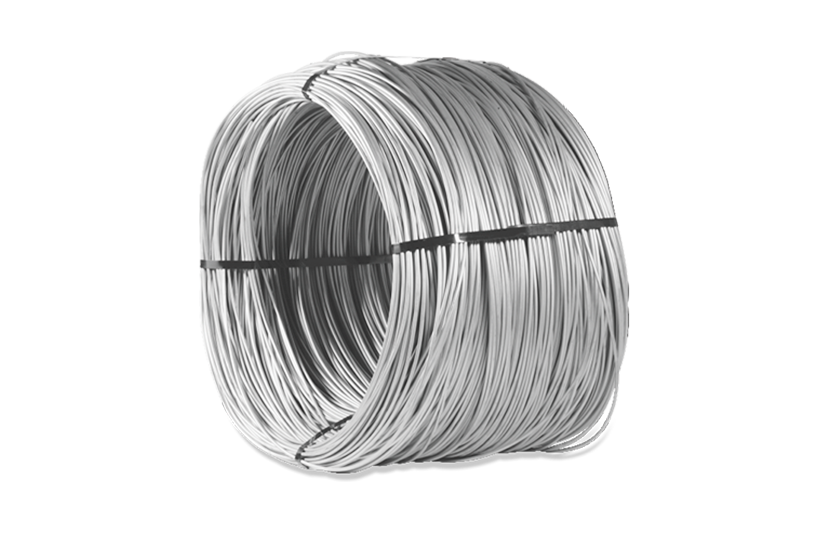
Galfan steel wire is widely recognized as a high-performance corrosion-resistant wire solution designed for demanding outdoor and industrial environments. When exposed to extreme weather conditions such as heavy rain, snow, ice, salt spray, high humidity, intense heat, strong wind, and repeated freeze-thaw cycles, the durability of steel wire becomes a critical factor in long-term performance. This makes Galfan steel wire performance under extreme weather conditions an important topic for engineers, contractors, distributors, and project planners who need reliable materials for infrastructure, fencing, gabions, agricultural systems, and protective applications.
Compared with conventional Galvanized Steel Wire, Galfan steel wire offers enhanced corrosion resistance due to its zinc-aluminum alloy coating. This coating helps form a stable protective barrier that slows oxidation and improves service life in harsh outdoor conditions. For buyers and specifiers searching for a balance between strength, weather resistance, and economic value, Galfan steel wire is often considered an effective solution.
This page provides industry-focused information about Galfan steel wire, including its definition, weather performance characteristics, key advantages, technical specifications, environmental resistance, and common application scenarios. The content below is written in a format suitable for SEO-friendly blog pages, product category pages, industry guides, and HTML content blocks.
Galfan steel wire is a steel wire coated with a zinc-aluminum alloy, typically containing a high percentage of zinc and a smaller percentage of aluminum. The coating is applied to improve corrosion resistance, especially in outdoor and aggressive environments. The term “Galfan” is commonly used in the industry to describe this type of alloy-coated wire, which is known for its excellent weathering performance and extended service life.
The base material is usually low-carbon steel, although specific wire grades can vary depending on the intended use. The coating process creates a metallic protective layer that can withstand moisture, air pollution, temperature fluctuations, and other environmental stressors better than standard bare steel wire.
In practical terms, Galfan steel wire is valued because it combines:
Steel wire used outdoors is constantly affected by environmental stress. Extreme weather can accelerate corrosion, reduce tensile performance, increase surface wear, and shorten service life. In many applications, the wire must resist not only moisture, but also mechanical damage from wind, moving debris, ice loads, and repeated expansion and contraction caused by temperature changes.
Common extreme weather factors include:
| Weather Condition | Main Impact on Steel Wire | Why Protection Matters |
|---|---|---|
| Heavy rain | Promotes oxidation and surface corrosion | Water exposure can quickly damage unprotected wire |
| High humidity | Encourages continuous moisture contact | Increases long-term rust risk |
| Salt spray / coastal air | Speeds up corrosive reactions | Requires strong anti-corrosion coating |
| Snow and ice | Adds weight, pressure, and freeze-thaw stress | Surface protection must remain intact under repeated cycles |
| High heat / UV exposure | Can accelerate coating aging and material fatigue | Stable coating chemistry improves durability |
| Strong wind | Causes vibration and abrasion | Mechanical resilience is essential |
| Freeze-thaw cycles | Cause expansion and contraction stress | Coating adhesion and flexibility become important |
These conditions create demanding service environments where ordinary steel wire may fail early. Galfan steel wire performance under extreme weather conditions is especially important because the coating is engineered to maintain protection even when exposed to long-term environmental stress.
The main reason Galfan steel wire performs well in extreme weather is the zinc-aluminum alloy coating. This coating provides both physical shielding and electrochemical protection. The zinc component acts as a sacrificial layer, while the aluminum contributes to coating stability and corrosion resistance. Together, they form a durable surface that protects the underlying steel core.
Compared with traditional zinc-only coatings, zinc-aluminum alloy coatings often offer:
In extreme weather, the protective layer is important because corrosion often starts at points where moisture, oxygen, and contaminants come into contact with the wire surface. If the coating is dense, uniform, and adherent, the wire can maintain performance for a much longer period.
Galfan steel wire has become popular in weather-exposed applications because it offers a strong combination of protection and practicality. Below are the major advantages associated with Galfan steel wire performance under extreme weather conditions.
Corrosion resistance is the most important property for outdoor wire products. Galfan steel wire provides strong resistance to rust in wet, humid, and salt-containing environments. This is one of the reasons it is frequently used in fencing, gabions, mesh systems, and support structures.
A longer service life means lower replacement frequency and better lifecycle value. In infrastructure or agricultural installations, wire replacement can be expensive and time-consuming. Galfan steel wire helps reduce these costs by lasting longer under harsh weather exposure.
Galfan steel wire can typically be processed into different wire diameters, mesh patterns, and fabrication forms. This makes it useful for a wide range of applications where both performance and manufacturability are important.
Coastal areas are among the most challenging environments for steel wire because salt accelerates corrosion. Galfan steel wire is often selected in these environments because its coating system offers better resistance than many conventional alternatives.
While appearance is not always the top priority, surface stability matters in visible installations. Galfan steel wire typically maintains a more consistent protective surface over time, helping projects retain a cleaner and more uniform look.
Although initial material cost may vary by specification, the longer lifespan and lower maintenance needs can make Galfan steel wire a cost-efficient choice over the full service cycle.
To understand the value of Galfan steel wire, it is helpful to look at how it performs in specific environmental conditions. The following sections summarize common weather challenges and the expected benefits of the Galfan coating system.
Heavy rainfall and prolonged wet exposure create ideal conditions for rust formation on untreated steel. Galfan steel wire performs well in these situations because the alloy coating provides a barrier against direct moisture contact. The coating also helps reduce the speed at which corrosion spreads if the surface is scratched.
In tropical and subtropical climates, the air remains moist for long periods. Continuous humidity can create a near-constant corrosion risk. Galfan steel wire is suitable for these environments because its zinc-aluminum coating resists atmospheric corrosion more effectively than basic steel surfaces.
Coastal regions expose steel products to airborne salt, which significantly increases corrosion rates. Galfan steel wire is often preferred in marine-adjacent settings, ports, seawalls, and coastal fencing because the coating is designed to deliver improved protection against chloride-rich conditions.
In cold climates, wire products may experience snow load, ice buildup, and repeated freeze-thaw cycles. These conditions can create stress on the coating surface and the steel core. Galfan steel wire performs well because the protective layer remains effective across a wide range of temperatures and helps reduce damage from moisture trapped during freezing.
Strong wind can cause vibration, movement, and abrasion, especially in fence systems, suspended meshes, and exposed wire structures. Galfan steel wire offers solid mechanical stability when properly specified and installed. The protective coating helps preserve the wire surface even when small frictional forces are present.
Although metal wire is less vulnerable to UV degradation than many polymer materials, heat can still affect service conditions. High temperatures may intensify oxidation processes and accelerate aging in harsh environments. Galfan steel wire helps maintain stable outdoor performance by resisting environmental deterioration more effectively than unprotected steel.
Because of its durability and corrosion resistance, Galfan steel wire is used across many industries. The following applications are especially relevant when weather exposure is severe.
| Application | Why Galfan Steel Wire Is Used | Weather Advantage |
|---|---|---|
| Gabions and retaining structures | Requires long-term corrosion resistance in outdoor soil and water contact | Performs well in rain, humidity, and freeze-thaw conditions |
| Fencing systems | Needs dependable outdoor durability | Resists corrosion from rain, wind, and snow |
| Agricultural wire | Used in fields and exposed farm environments | Handles moisture, temperature shifts, and long-term outdoor use |
| Wire mesh and netting | Requires stable coating and structural reliability | Suitable for coastal and industrial atmospheres |
| Support and binding wire | Used in construction and utility work | Works well in variable climate conditions |
| Road and infrastructure protection | Needs weather-resistant material for exposed installations | Effective in rain, heat, snow, and dust exposure |
These use cases show why Galfan steel wire is often selected where durability is more important than short-term material savings. In outdoor systems, the total cost of ownership often depends on how well the wire resists weather over time.
The exact specification of Galfan steel wire depends on the intended application, local standards, and project requirements. The table below provides a general industry overview of common specification ranges. These values are for informational purposes and should be verified against project-specific technical documents.
| Specification Item | Common Range / Description | Notes |
|---|---|---|
| Base material | Low-carbon steel | Chosen for strength and formability |
| Coating type | Zinc-aluminum alloy | Used for improved corrosion resistance |
| Wire diameter | Various, depending on application | Often customized for mesh, fencing, or binding use |
| Tensile strength | Depends on steel grade and drawing process | Can be specified for soft, medium, or high-strength applications |
| Coating mass | Project-dependent | Higher coating mass usually improves durability |
| Surface finish | Smooth metallic finish | May vary slightly by production process |
| Service environment | Outdoor, humid, coastal, industrial, agricultural | Especially suitable for harsh weather exposure |
| Primary benefit | Enhanced weather and corrosion resistance | Main reason for product selection |
One of the most common questions in material selection is how Galfan steel wire compares with conventional galvanized steel wire. Both are designed for corrosion protection, but Galfan uses a zinc-aluminum alloy system that can offer stronger performance in difficult environments.
| Feature | Galfan Steel Wire | Conventional Galvanized Steel Wire |
|---|---|---|
| Coating composition | Zinc-aluminum alloy | Zinc coating |
| Corrosion resistance | High | Moderate to high, depending on coating mass |
| Performance in coastal areas | Strong | Can be more limited in severe salt environments |
| Service life in harsh weather | Generally longer | Varies by coating and exposure |
| Resistance to humidity | Excellent | Good, but less robust in aggressive atmospheres |
| Maintenance frequency | Lower over time | May require more frequent inspection |
| Typical use case | Harsh outdoor environments | General outdoor applications |
In many projects, the decision between these two materials depends on the expected environmental exposure, target service life, and total budget. For severe weather conditions, Galfan steel wire is often the stronger choice when corrosion resistance is a top priority.
Even though Galfan steel wire is highly weather resistant, actual performance depends on several factors. Understanding these variables can help improve product selection and long-term results.
Coating thickness is one of the most important variables affecting service life. A thicker and more uniform coating generally provides better protection in extreme weather conditions.
Larger wire diameters may provide greater mechanical durability, while smaller diameters may be chosen for flexibility or specific mesh patterns. The right diameter depends on the structural needs of the project.
Even the best wire material can underperform if installed improperly. Proper tensioning, fastening, bending radius, and handling are important for maintaining coating integrity.
A dry inland area will not stress the wire in the same way as a coastal or industrial zone. When the environment is more aggressive, the wire specification should be upgraded accordingly.
Direct contact with dissimilar metals, contaminated soil, or chemically aggressive materials may influence performance. System design should consider all environmental and chemical exposure risks.
Service life is one of the strongest selling points of Galfan steel wire performance under extreme weather conditions. While exact lifespan cannot be guaranteed without reference to the specific design, coating thickness, and exposure class, Galfan is generally selected when long-term durability is required.
In practical terms, longer service life can mean:
This is especially important in remote installations, hard-to-access areas, and projects where repairs are expensive or disruptive.
Before selecting Galfan steel wire, project teams should review performance requirements carefully. The following checklist is useful for specification planning.
| Evaluation Item | What to Check | Why It Matters |
|---|---|---|
| Environmental exposure | Rain, humidity, salt spray, heat, snow, wind | Determines corrosion risk |
| Expected service life | Short-term, medium-term, or long-term use | Affects coating and wire selection |
| Mechanical load | Tension, vibration, impact, abrasion | Influences wire diameter and strength |
| Fabrication method | Drawing, weaving, welding, twisting, fastening | Affects product suitability |
| Maintenance access | Easy, moderate, or difficult access | Important for lifecycle planning |
| Budget target | Initial cost vs. total cost of ownership | Supports economic decision-making |
Galfan steel wire can be supplied in multiple forms depending on end-use requirements. Common supply formats include coils, cut lengths, mesh components, and fabricated wire assemblies. The right format depends on processing needs, installation efficiency, and project design.
For businesses building industry pages, directories, or informational blog articles, the topic of Galfan steel wire performance under extreme weather conditions offers strong search relevance. High-intent keywords related to corrosion resistance, weatherproof wire, outdoor wire durability, zinc-aluminum coating, coastal resistance, and long service life often attract users researching technical material options.
Useful SEO keyword themes include:
When used naturally throughout a page, these terms can help improve topical relevance for search engines while also making the content more useful for readers seeking technical guidance.
Yes. Galfan steel wire is often chosen for coastal environments because the zinc-aluminum alloy coating provides improved resistance to salt-related corrosion.
Yes. Its coating system is well suited for outdoor temperature variations and can perform reliably in climates with repeated freezing and thawing.
In many harsh-weather applications, Galfan steel wire offers stronger corrosion resistance and longer service life than conventional galvanized wire. However, the best choice depends on the specific project environment and budget.
Maintenance needs are generally lower than for uncoated or less protected wire, but regular inspections are still recommended in severe environments.
Galfan steel wire performance under extreme weather conditions makes it a dependable material choice for demanding outdoor and industrial applications. Its zinc-aluminum alloy coating helps improve corrosion resistance, extend service life, and maintain stable performance in rain, humidity, salt spray, snow, wind, heat, and freeze-thaw cycles. These qualities make it especially valuable in applications where durability and long-term reliability are essential.
For industry pages, product category pages, and technical blog content, Galfan steel wire represents a strong SEO topic because it combines practical value, high search intent, and broad application relevance. Whether used in fencing, gabions, agricultural systems, infrastructure protection, or general outdoor wire products, Galfan steel wire remains a widely recognized solution for extreme weather resistance.
When specifying materials for harsh environments, understanding coating type, environmental exposure, mechanical requirements, and expected service life is essential. Galfan steel wire offers a balanced combination of strength, protection, and long-term performance that continues to make it an important option in modern wire applications.
```

 Landline Phone: +86-513-85100011
Telephone: +86 13585223056
 E-mail: hangtong@nthangtong.com
vicky@nthangtong.com
 Address: No. 508, Guangxing Road, Baishan Town, Bo'ai County, Jiaozuo City, Henan Province
Copyright © Henan Suxiang Steel Cable Co., Ltd
This website uses cookies to ensure you get the best experience on our website.
 Español
 한국어
한국어 العربية
 Tiếng Việt
 Filipino



 Phone
Phone
Comment
(0)