

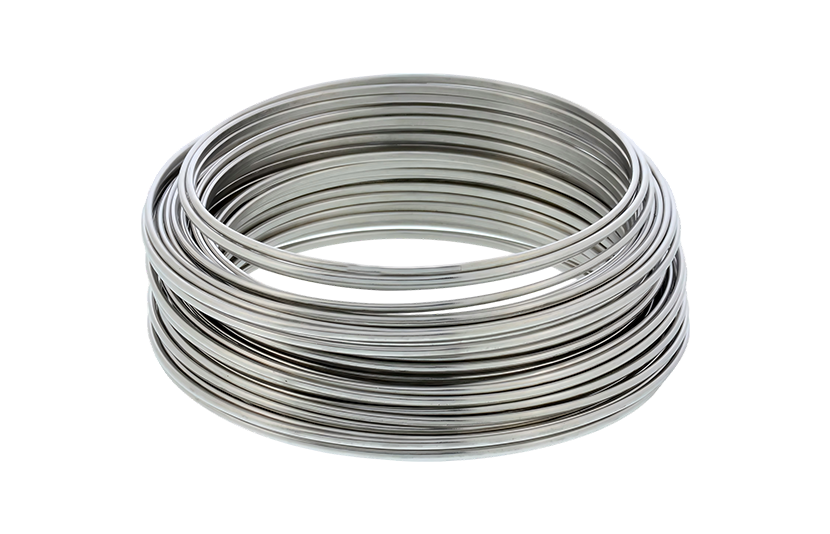
Hot-dip galvanized Steel Wire for communication cable support is a durable, corrosion-resistant wire product widely used in telecommunication infrastructure, aerial cable suspension systems, utility support networks, and outdoor cabling installations. Designed to provide mechanical strength, long service life, and weather resistance, this type of Galvanized Steel Wire plays a critical role in helping communication cables remain stable, properly tensioned, and protected from environmental stress.
In modern telecommunications and network construction, cable support materials must perform reliably under harsh outdoor conditions. Rain, humidity, ultraviolet exposure, temperature changes, wind load, and long-term tension can all affect cable performance. This is why Hot-Dip Galvanized Steel wire is commonly specified for communication cable support applications. The zinc coating formed through the hot-dip galvanizing process creates a protective barrier that improves rust resistance and extends service life, making it a preferred material for demanding infrastructure projects.
This page provides a comprehensive, SEO-friendly overview of hot-dip galvanized steel wire for communication cable support, including its definition, key benefits, common uses, material structure, manufacturing process, technical specifications, selection considerations, and industry-related information. The content below is written in clear English and is suitable for blogs, product category pages, industry pages, and educational content for search engine indexing.
Hot-dip galvanized steel wire for communication cable support is steel wire that has been coated with a layer of zinc through a hot-dip galvanizing process. The wire is commonly used to support communication cables such as telecom lines, fiber optic cables, aerial cables, and network distribution cables. It is engineered to offer high tensile strength, corrosion protection, and excellent outdoor durability.
The term “communication cable support” generally refers to structural or auxiliary support systems that help hold communication cables in position. These systems may include aerial lashing, suspension support, messenger wire systems, guy wires, and cable hanging arrangements. In these applications, galvanized steel wire acts as a load-bearing and protective element that keeps cables stable and reduces the risk of sagging, stretching, or physical damage.
Hot-dip galvanization differs from simple surface coating methods because the steel wire is immersed in molten zinc, producing a metallurgically bonded zinc layer. This coating provides both a physical barrier and sacrificial protection, meaning the zinc corrodes first before the underlying steel is exposed. As a result, hot-dip galvanized wire is especially suitable for long-term outdoor use in communication cable support systems.
Communication networks depend on stable cable installation. Whether the cables are mounted on poles, towers, rooftops, or utility structures, they must remain secure under changing environmental and mechanical conditions. Hot-dip galvanized steel wire helps meet these requirements by providing a strong and corrosion-resistant support solution.
In many installations, communication cables are exposed to wind vibration, temperature expansion, snow load, ice accumulation, and long spans between support points. A wire that can maintain strength while resisting rust is essential for safety, reliability, and long-term performance. By using hot-dip galvanized steel wire for communication cable support, infrastructure designers can improve cable stability and reduce maintenance frequency.
This material is also valuable because it can be used in a wide range of environments, including urban areas, coastal zones, industrial regions, and rural telecommunication routes. The zinc coating helps protect the steel in environments where moisture, airborne contaminants, and atmospheric corrosion are common.
| Advantage | Description | Benefit in Cable Support Use |
|---|---|---|
| Corrosion Resistance | Zinc coating protects the steel from rust and oxidation. | Extends service life in outdoor and humid environments. |
| High Tensile Strength | Steel wire provides strong mechanical load-bearing capacity. | Supports long cable spans and reduces sagging risk. |
| Weather Durability | Performs well under rain, sun, wind, and temperature changes. | Reliable for exposed communication installations. |
| Long Service Life | Hot-dip galvanizing slows corrosion over time. | Reduces replacement and maintenance costs. |
| Cost Efficiency | Combines strong performance with moderate material cost. | Suitable for large-scale infrastructure projects. |
| Installation Versatility | Available in various diameters and constructions. | Can be matched to different cable support designs. |
These advantages make hot-dip galvanized steel wire one of the most practical materials for communication cable support. It offers a strong balance of performance, protection, and affordability, especially for systems that require long-term outdoor exposure.
Hot-dip galvanized steel wire is used in many communication and utility applications where cable support is needed. Typical use cases include:
In these applications, the galvanized wire may serve as a load-bearing support, a tension element, or part of a suspension assembly. Its purpose is to keep communication cables aligned, secure, and protected from mechanical strain. Because network expansion continues worldwide, the demand for reliable hot-dip galvanized steel wire for communication cable support remains strong across telecom, broadband, and infrastructure sectors.
The hot-dip galvanizing process is the key reason this wire performs so well in outdoor environments. The process generally includes surface cleaning, pickling, fluxing, and immersion in molten zinc. Once the steel wire is dipped into the zinc bath, a bonded zinc-iron alloy layer forms on the surface.
| Process Step | Purpose | Result |
|---|---|---|
| Surface Cleaning | Removes dirt, grease, and contaminants. | Prepares the steel for coating adhesion. |
| Pickling | Removes rust and scale using acid treatment. | Creates a clean metal surface. |
| Fluxing | Prevents oxidation before zinc immersion. | Improves coating quality and bond strength. |
| Hot-Dip Galvanizing | Steel wire is immersed in molten zinc. | Forms a durable protective coating. |
| Cooling and Inspection | Wire is cooled and checked for coating quality. | Ensures consistent performance and appearance. |
The finished galvanized wire is then wound into coils or spools depending on the required length and application. The thickness of the zinc layer and the wire diameter can be adjusted to suit different levels of corrosion protection and load-bearing requirements.
The exact specification of hot-dip galvanized steel wire for communication cable support may vary by project requirements, regional standards, and installation conditions. However, the following table shows common industry reference values.
| Specification Item | Common Range / Standard | Notes |
|---|---|---|
| Wire Diameter | 0.8 mm to 6.0 mm | Selected based on load and support design. |
| Tensile Strength | 1000 MPa to 1800 MPa | Higher strength grades used for demanding support systems. |
| Zinc Coating Weight | Varies by standard and corrosion class | Heavier coating provides better rust resistance. |
| Surface Finish | Bright, matte, or spangled | Appearance may differ by process and standard. |
| Wire Construction | Single wire, stranded wire, or lashing wire | Depends on application type. |
| Core Material | Low-carbon steel or high-carbon steel | Material selection affects strength and flexibility. |
| Packaging | Coils, spools, or reels | Packaging depends on handling and installation method. |
| Standards | ASTM, EN, BS, JIS, IEC-related specifications | Project requirements may reference different standards. |
These values are only general references. In actual procurement, buyers should confirm the required diameter, tensile strength, zinc coating, and packaging format according to the communication cable support system design and the relevant engineering standard.
When selecting hot-dip galvanized steel wire for communication cable support, several material properties deserve attention. The most important are tensile strength, elongation, coating thickness, corrosion resistance, and flexibility.
Tensile strength measures the maximum stress the wire can withstand before breaking. For cable support applications, this is one of the most critical properties because the wire must carry tension over long distances and remain stable under load.
Since communication cables are usually installed outdoors, the wire must resist moisture, atmospheric pollutants, and oxidation. The zinc layer formed by hot-dip galvanizing is essential for long-term corrosion resistance.
The wire should be flexible enough to be installed, tensioned, and secured without cracking or losing structural integrity. Flexibility is especially important in lashing, wrapping, or suspension use cases.
A uniform zinc coating helps ensure that all areas of the wire receive similar protection. Uneven coating may reduce durability in exposed environments.
Good surface quality supports both performance and installation. While appearance is not the only factor, a consistent, defect-free surface is usually preferred in industrial cable support systems.
| Material Type | Strength | Corrosion Resistance | Typical Use |
|---|---|---|---|
| Hot-Dip Galvanized Steel Wire | High | High | Outdoor communication cable support |
| Plain Steel Wire | High | Low | Indoor or temporary use |
| Stainless Steel Wire | High | Very High | Specialized or highly corrosive environments |
| Aluminum Alloy Wire | Moderate to High | High | Lightweight support and specific installations |
| Polymer-Coated Wire | Moderate | Moderate to High | Applications requiring added surface protection |
Compared with plain steel wire, hot-dip galvanized steel wire offers a much better balance of rust protection and affordability. Compared with stainless steel, it is usually more cost-effective for large-scale communication cable support projects while still delivering strong outdoor performance. This is one reason galvanized wire is so widely used in telecommunications infrastructure.
Selecting the right wire for communication cable support depends on several engineering and environmental factors. The following points are commonly reviewed during specification or procurement.
| Selection Factor | Why It Matters | What to Check |
|---|---|---|
| Load Requirements | Determines the wire’s ability to support cable weight and tension. | Breaking strength, working load, span length. |
| Environment | Affects corrosion rate and durability needs. | Humidity, rain, coastal exposure, pollution level. |
| Wire Diameter | Impacts strength, flexibility, and installation behavior. | Diameter match with project design. |
| Zinc Coating Thickness | Influences corrosion resistance and service life. | Coating weight or coating class. |
| Installation Method | Determines whether the wire should be stranded, smooth, or lashing type. | Compatibility with support hardware and fittings. |
| Standard Compliance | Ensures material meets relevant technical requirements. | ASTM, EN, BS, IEC, or local standards. |
Careful selection helps ensure the communication cable support system remains safe, efficient, and durable. In many cases, engineers choose a galvanized steel wire specification that balances performance, installation convenience, and long-term cost.
Hot-dip galvanized steel wire is widely used in telecommunications because it adapts well to different support structures and cable layouts. Below are some common project types where it is frequently specified:
In each of these applications, the wire helps maintain cable alignment and tension. This reduces mechanical stress on the communication cable itself and contributes to safer, more reliable service. Because telecom infrastructure often needs to remain in place for years, long-lasting galvanized wire is a practical choice.
Quality control is important for ensuring that hot-dip galvanized steel wire performs as intended in communication cable support systems. Common inspection points include wire diameter, zinc coating consistency, tensile strength, surface quality, and packaging condition.
| Inspection Item | What Is Checked | Why It Matters |
|---|---|---|
| Diameter Accuracy | Wire size consistency across the coil or spool. | Affects fit, strength, and installation compatibility. |
| Zinc Coating | Thickness, adhesion, and uniform coverage. | Ensures corrosion protection. |
| Tensile Performance | Strength under load and elongation behavior. | Confirms support capability. |
| Surface Condition | Cracks, flaking, rust spots, or defects. | Indicates production quality and durability. |
| Packaging Condition | Coil protection and labeling accuracy. | Supports safe transport and identification. |
For project buyers, documentation such as material certificates, coating test results, and mechanical test reports can be helpful when confirming product suitability. This is especially relevant for communication cable support installations where reliability and compliance are essential.
One of the main reasons to use hot-dip galvanized steel wire for communication cable support is its long service life. The zinc layer protects the steel from atmospheric corrosion and helps the wire perform for many years under normal outdoor conditions.
However, service life depends on several factors, including coating thickness, climate, pollution exposure, installation quality, and mechanical wear. In coastal or industrial regions, corrosion can occur more quickly than in mild environments. Periodic inspection is recommended to check for signs of coating damage, rust, loosening, or deformation.
Maintenance practices may include visual inspection, tension verification, replacement of damaged sections, and checking the condition of related fittings. By combining quality materials with regular inspection, communication cable support systems can achieve strong long-term reliability.
The following search terms are commonly associated with this topic and may help improve SEO relevance when used naturally in page content:
Using these phrases naturally throughout an article, directory page, or industry landing page can improve topical relevance for search engines while keeping the content readable and informative.
Hot-dip galvanized steel wire for communication cable support is a practical, durable, and widely used material in telecom and network infrastructure. Its combination of high tensile strength, corrosion resistance, weather durability, and cost efficiency makes it ideal for supporting communication cables in outdoor environments.
Whether used for aerial installations, fiber optic systems, messenger wire applications, or pole-mounted cable support, galvanized steel wire provides the structural reliability needed for modern communication networks. By understanding the material’s properties, common specifications, applications, and selection criteria, buyers and engineers can make better decisions for long-term cable support performance.
For SEO and content publishing purposes, this topic has strong industry relevance and supports a wide range of related keywords such as galvanized steel wire, communication cable support, telecom support wire, and hot-dip galvanized wire for outdoor infrastructure. It is suitable for use in educational pages, category pages, and article-based content strategies focused on communication infrastructure materials.
```

 Landline Phone: +86-513-85100011
Telephone: +86 13585223056
 E-mail: hangtong@nthangtong.com
vicky@nthangtong.com
 Address: No. 508, Guangxing Road, Baishan Town, Bo'ai County, Jiaozuo City, Henan Province
Copyright © Henan Suxiang Steel Cable Co., Ltd
This website uses cookies to ensure you get the best experience on our website.
 Español
 한국어
 العربية
 Tiếng Việt
 Filipino



 Phone
Comment
(0)