

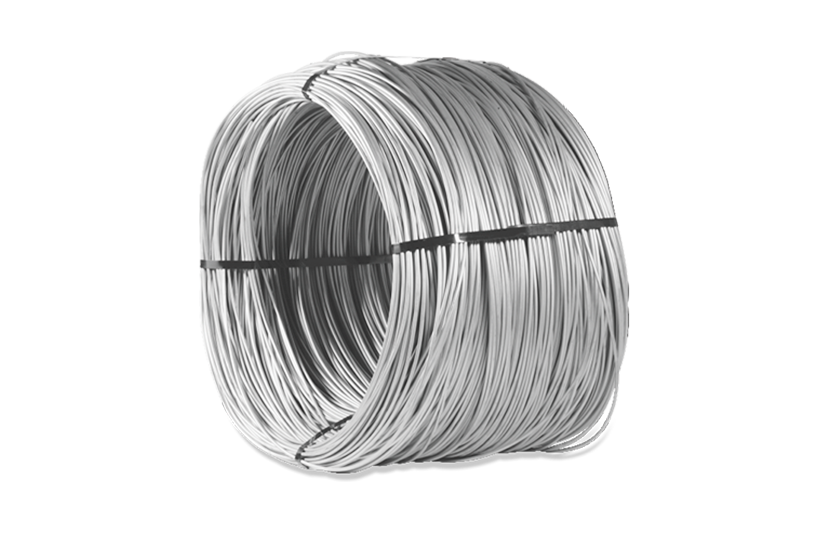
Galfan steel wire is widely recognized as a high-performance corrosion-resistant wire for demanding industrial, agricultural, marine, and construction applications. In environments where moisture, salt spray, chemicals, temperature fluctuations, and long-term exposure can quickly damage ordinary steel, Galfan steel wire offers a practical and durable solution. Its unique zinc-aluminum coating system significantly improves corrosion resistance, extends service life, and reduces maintenance costs across many end-use industries.
This guide explains what Galfan steel wire is, how it works, why it performs better than traditional galvanized wire in harsh environments, and what specifications buyers and engineers should consider when selecting it for commercial projects. The information below is industry-general and suitable for blog posts, category pages, product pages, and SEO content focused on corrosion-resistant wire, zinc-aluminum Coated Steel Wire, and long-life wire solutions.
Galfan steel wire is a steel wire coated with a zinc-aluminum alloy, typically containing approximately 95% zinc and 5% aluminum. This metal coating is applied to the wire surface to create a protective barrier against corrosion. Compared with standard zinc-coated wire, Galfan steel wire offers improved resistance to rust, oxidation, moisture penetration, and environmental degradation.
The term “Galfan” is commonly used in the industry to describe zinc-aluminum alloy coated steel products. The coating provides both barrier protection and sacrificial protection. In simple terms, the coating shields the steel from direct exposure to corrosive elements while also helping protect cut edges or minor surface damage by slowing the corrosion process.
Because of this combination of properties, Galfan steel wire is often selected for applications where long-term durability is important and where replacement or repair would be costly or difficult.
Corrosion is one of the biggest threats to steel performance. In harsh environments, steel wire can degrade rapidly due to exposure to salt, humidity, rain, industrial pollutants, fertilizers, chemicals, and temperature cycling. Once corrosion begins, it can weaken the wire, reduce tensile performance, shorten service life, and cause expensive failures.
Harsh environments often include:
In all of these settings, corrosion-resistant wire is not just a performance upgrade—it is often a necessity. Galfan steel wire helps maintain structural integrity, appearance, and reliability over time.
The main reason Galfan steel wire performs so well in harsh environments is the zinc-aluminum coating. This alloy coating provides several corrosion-control mechanisms at once:
In practical terms, Galfan steel wire often lasts longer than standard galvanized alternatives in aggressive environments. That makes it an attractive option for users looking to reduce total lifecycle cost rather than focusing only on initial purchase price.
Although both products are corrosion-resistant coated wires, there are important differences between Galfan steel wire and conventional Galvanized Steel Wire. Galvanized wire typically uses a pure zinc coating, while Galfan steel wire uses a zinc-aluminum alloy coating. The addition of aluminum changes the coating behavior and often improves long-term corrosion resistance.
| Feature | Galfan Steel Wire | Conventional Galvanized Wire |
|---|---|---|
| Coating composition | Zinc-aluminum alloy, typically 95% zinc / 5% aluminum | Primarily zinc |
| Corrosion resistance | High, especially in harsh and outdoor environments | Good, but generally lower than Galfan in aggressive conditions |
| Service life | Often longer in corrosive environments | Shorter in salt, humidity, or chemical exposure |
| Barrier protection | Strong and stable | Effective, but more dependent on coating thickness |
| Cut-edge protection | Generally improved | Standard sacrificial protection |
| Best use cases | Marine, agricultural, industrial, long-life outdoor applications | General-purpose indoor or mild outdoor use |
For projects where corrosion is a major concern, Galfan steel wire can be a more durable and cost-effective choice over time. The better performance in aggressive environments often offsets the higher initial material cost.
Galfan steel wire provides multiple advantages for engineers, contractors, distributors, and end users. These advantages help explain why it is commonly specified in demanding industrial and outdoor applications.
The most important benefit is improved corrosion resistance. The zinc-aluminum coating helps protect steel from rusting in wet, salty, humid, and chemically active environments.
Because corrosion progresses more slowly, Galfan steel wire can deliver a longer service life than many standard wire products. This reduces replacement frequency and supports long-term project performance.
Systems made with Galfan steel wire often require less frequent maintenance, inspection, and repair. This is especially valuable in large-scale or hard-to-access installations.
While the upfront cost may be higher than basic galvanized wire, the reduced maintenance and longer lifespan can lower total cost of ownership over the life of the product.
Galfan steel wire can be used in a wide range of products and systems, including fencing, gabions, mesh, binding wire, support wire, and cable-related applications.
Sunlight, rain, wind, and temperature changes can all accelerate wear on metal products. Galfan steel wire is designed to maintain performance in these changing conditions.
Galfan steel wire is especially suitable for environments where corrosion risk is elevated. Below are common conditions where its protective coating provides clear value.
| Environment | Main Corrosion Challenge | Why Galfan Steel Wire Helps |
|---|---|---|
| Coastal areas | Salt spray and chloride attack | Zinc-aluminum coating improves resistance to salt-related corrosion |
| Marine applications | Constant moisture and salt exposure | Slower coating breakdown and improved service life |
| Agricultural sites | Humidity, fertilizers, soil chemicals | Protective coating resists chemical and moisture-driven corrosion |
| Industrial zones | Pollutants and chemical vapors | Stable barrier protection against environmental contamination |
| High-rainfall regions | Frequent wet-dry cycling | Reduced rust propagation during repeated exposure |
| Infrastructure projects | Long-term outdoor exposure | Extended durability supports long service intervals |
Due to its strong corrosion resistance, Galfan steel wire is used in many industries and product categories. Its application depends on wire diameter, coating thickness, mechanical properties, and the specific environment.
In these applications, the wire must do more than simply hold shape. It must remain mechanically stable and corrosion resistant over time. Galfan steel wire is well suited to this dual requirement.
The corrosion resistance of Galfan steel wire comes from the interaction between zinc and aluminum in the coating. Zinc provides sacrificial protection, meaning it corrodes first to protect the steel beneath it. Aluminum improves the coating’s resistance to oxidation and helps form a more stable surface layer.
When exposed to air and moisture, the coating develops a protective film that slows further corrosion. This film helps reduce direct attack on the underlying metal. In aggressive conditions, the coating continues to perform better than many pure zinc systems because the aluminum content improves barrier properties and coating stability.
The result is a wire that can better withstand exposure to moisture, salt, and environmental contaminants while maintaining mechanical usefulness over a longer time period.
Even though Galfan steel wire is highly corrosion resistant, actual service performance depends on several factors. Selecting the right product specification is important for achieving the expected lifespan.
| Performance Factor | Impact on Corrosion Resistance |
|---|---|
| Coating thickness | Thicker coatings generally provide longer protection |
| Wire diameter | Thicker wire may last longer in some applications due to greater metal mass |
| Exposure level | Salt, chemicals, and humidity can accelerate corrosion |
| Mechanical abrasion | Scraping or friction can damage the protective layer |
| Installation quality | Poor installation may expose the wire to unnecessary wear or damage |
| Maintenance practices | Regular inspection can help identify surface wear early |
To maximize performance, users should match the wire specification to the actual environmental severity and expected service life. Not every application requires the same coating level or diameter.
Galfan steel wire is available in different diameters, coating weights, tensile grades, and packaging formats. Exact specifications may vary by product type and end use. The table below shows common specification categories to evaluate.
| Specification | Common Options | Selection Notes |
|---|---|---|
| Wire diameter | Light, medium, and heavy gauge options | Choose based on load requirements and application type |
| Coating type | Zinc-aluminum alloy coating | Core feature for corrosion resistance |
| Coating thickness | Standard to heavy coating levels | Higher levels may be preferred in severe environments |
| Tensile strength | Soft, medium, or high tensile grades | Depends on structural or fastening requirements |
| Surface finish | Smooth coated surface | Supports handling and installation |
| Form | Spool, coil, cut length | Determined by production and use case |
When selecting Galfan steel wire, it is important to consider both corrosion resistance and mechanical performance. The best choice depends on the application and exposure conditions.
Good specification selection helps ensure the wire performs as expected in real-world conditions and avoids premature corrosion or mechanical failure.
Infrastructure and outdoor projects often require materials that can withstand exposure for many years. Bridges, barriers, retaining systems, fences, and support components can all benefit from corrosion-resistant wire solutions. Galfan steel wire is commonly chosen in such projects because it offers a strong balance of durability, cost efficiency, and environmental resistance.
In public infrastructure, maintenance can be expensive and disruptive. Materials that reduce the need for replacement help lower long-term costs and improve reliability. Galfan steel wire supports this objective by extending the life of wire-based components under challenging conditions.
Agricultural environments can be surprisingly corrosive. Wire products may be exposed to fertilizer residue, manure, moisture, soil chemicals, and repeated handling. Galfan steel wire is well suited for fencing, support structures, trellising, and containment systems in agriculture.
Its corrosion-resistant coating helps maintain strength and appearance even when the wire is exposed to wet soil and chemical contaminants. For agricultural operators, this can mean fewer replacements, better reliability, and improved long-term value.
Salt is one of the most aggressive causes of corrosion. In marine and coastal areas, even small amounts of salt-laden moisture can quickly damage ordinary steel. Galfan steel wire offers improved resistance to chloride exposure, making it an effective choice for coastal fencing, marine support systems, protective mesh, and related applications.
In these environments, standard wire products can deteriorate faster than expected. Galfan wire is designed to better resist corrosion progression, helping maintain structural integrity for longer service periods.
Industrial environments often contain a combination of moisture, heat, pollutants, chemicals, and airborne contaminants. These conditions can accelerate corrosion and weaken wire products. Galfan steel wire supports industrial use by providing a more stable protective layer than many conventional alternatives.
It is commonly considered for support wire, mesh systems, protective enclosures, and binding applications where reliability matters and exposure conditions are severe.
No. Although both are corrosion-resistant coated wires, Galfan steel wire uses a zinc-aluminum alloy coating, while galvanized wire typically uses a pure zinc coating. The zinc-aluminum system generally performs better in harsher environments.
Yes. In fact, Galfan steel wire is often selected for outdoor use because it provides strong protection against weather, moisture, and environmental corrosion.
No coating can eliminate corrosion forever in every condition. However, Galfan steel wire significantly slows corrosion and extends usable service life compared with uncoated steel and many standard coated products.
Yes. Its improved resistance to salt and moisture makes it a strong candidate for coastal and marine applications, especially where long-term durability is needed.
Lifespan depends on coating thickness, environmental severity, abrasion, installation quality, and maintenance practices.
For content strategy and search visibility, Galfan steel wire articles often perform well when they naturally include related phrases such as:
These keyword themes help reinforce topical relevance for search engines while keeping the content useful for human readers. The best SEO results usually come from clear structure, informative headings, comparison tables, and practical details that match user intent.
Galfan steel wire improves corrosion resistance in harsh environments by combining zinc’s sacrificial protection with aluminum’s stabilizing effect. This zinc-aluminum coating system helps protect steel from rust, moisture, salt spray, industrial pollutants, and other damaging elements. As a result, the wire can deliver longer service life, reduced maintenance, and improved reliability in demanding applications.
Whether used in marine infrastructure, agriculture, industrial systems, fencing, mesh, or outdoor support structures, Galfan steel wire offers a practical balance of performance and value. For projects where corrosion resistance matters, it is one of the most effective coated wire options available in the market.
When selecting Galfan steel wire, focus on the severity of the environment, the required service life, coating thickness, and mechanical specification. With the right product choice, users can achieve better durability and lower lifecycle cost in even the harshest conditions.
```

 Landline Phone: +86-513-85100011
Telephone: +86 13585223056
 E-mail: hangtong@nthangtong.com
vicky@nthangtong.com
 Address: No. 508, Guangxing Road, Baishan Town, Bo'ai County, Jiaozuo City, Henan Province
Copyright © Henan Suxiang Steel Cable Co., Ltd
This website uses cookies to ensure you get the best experience on our website.
 Español
 한국어
한국어 العربية
 Tiếng Việt
 Filipino



 Phone
Phone
Comment
(0)