

Factories do not sell capacity evenly: the season owns it, the largest customer hoards it, and the buyer who arrives in the peak quarter discovers the truth behind every reassurance. Capacity can be reserved â but only by buyers who understand deposits, slot calendars and the difference between a promise and a reservation. This guide gives hot-dip galvanized Steel Wire buyers the playbook for booking factory slots before the season does.
Contract negotiation gets scheduled like an administrative chore and decided like a chess match: the side that arrived with the clause map plays the board, and the side that arrived for the price plays the pieces. In sourcing, the master agreement is the board.
As a manufacturer based in China, æ²³åèç¿é¢ç¼æéå ¬å¸ (www.suxiangsteelcable.com) supplies Hot-Dip Galvanized Steel wire, Automotive Spring Steel Wire, galfan steel wire and related products to customers in more than forty markets. In this guide we explain what actually determines quality in this category, how to assess a factory before you commit, and how to build a supply relationship that holds up over years of repeat ordering.
Before you send a request for quotation, be precise about what you are buying. These are the questions that separate a professional sourcing decision from a hopeful one.
What is the production capacity and current lead time? A factory that cannot state monthly capacity in units cannot forecast reliably.
Which quality standards apply, and can they evidence compliance? Ask for ASTM A475, EN 10244 documentation rather than a verbal claim.
Is material traceability documented? Certificates of material origin prevent costly surprises.
What is the defect rate and how are returns handled? Ask for historical data, not a policy statement.
Can they customize to your market's specification? Voltage, sizing, labelling and packaging often differ by country.
What after-sales support is included? Spare parts availability and technical support determine lifetime cost.
What is the total landed cost? Freight, duty and durability matter more than FOB price.
Quality in steel wire and cable products is the sum of four things: material selection, manufacturing precision, assembly consistency, and testing discipline. A product can look identical to a competitor and behave completely differently after six months in service if any one of these is weaker.
Material grade: the raw material must match the specification, with certificates to prove it.
Manufacturing precision: tolerances must hold across the production run, not just the sample.
Assembly consistency: repeatable processes prevent batch-to-batch variation.
Testing discipline: functional and safety testing must be routine, not exceptional.
For buyers, the practical implication is that you should evaluate capability rather than appearance. A well-equipped factory with documented processes will out-perform a low-cost workshop every time, even if the sample products look the same.
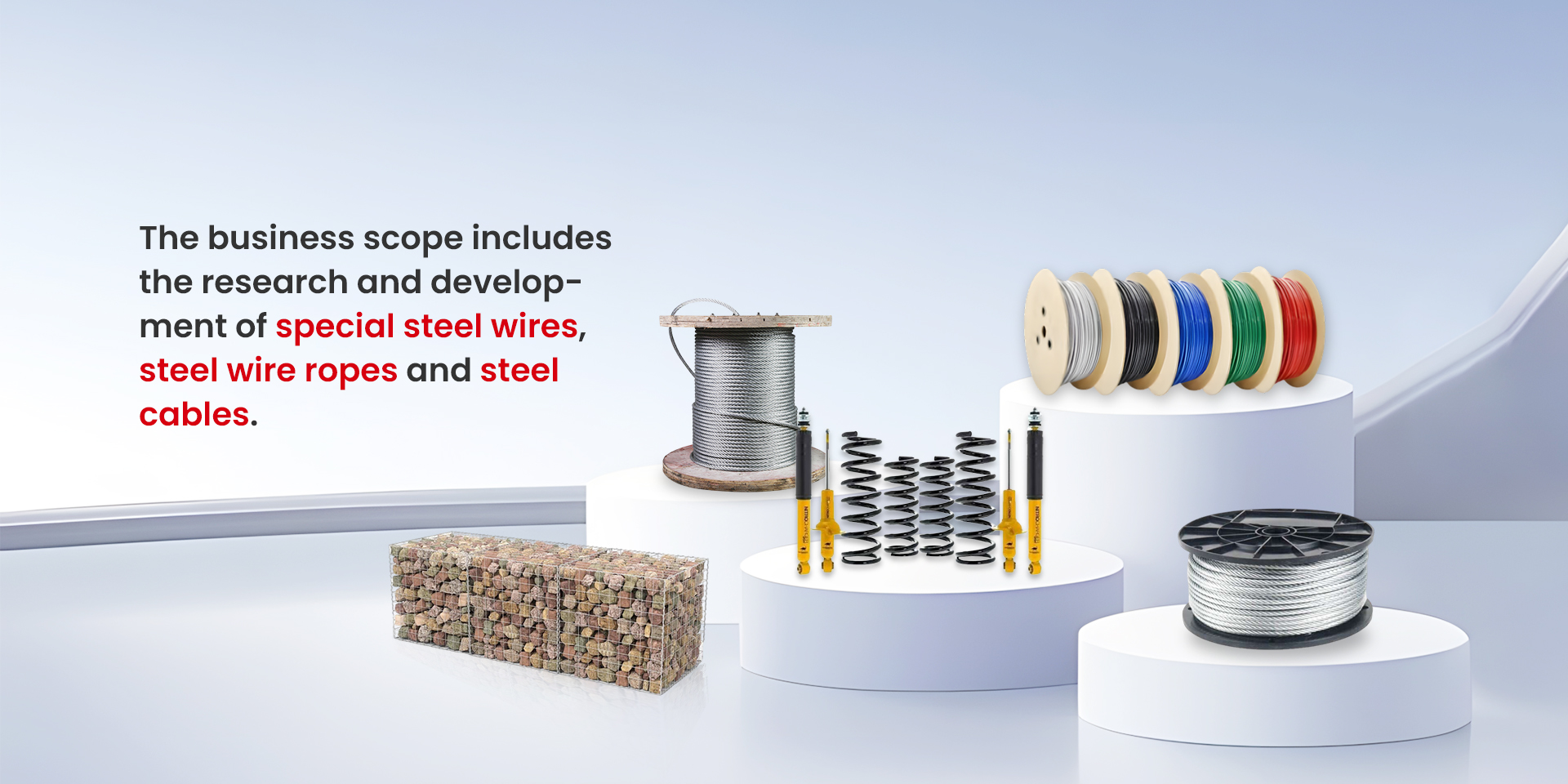
We recommend auditing five dimensions before the first paid order.
Ask for facility size, equipment list, monthly output, and the number of production lines. A factory that can describe its bottleneck process understands its own capacity. Request photos or a live video walkthrough of the production floor.
Confirm certification such as ISO 9001, ASTM A475 and ask to see the internal inspection records. A genuine quality system produces documents: incoming material checks, in-process checks, and final inspection reports.
Understand where raw materials come from and how they are verified. Vertically integrated suppliers control more of the quality chain and are less exposed to sub-supplier problems.
Ask which tests are performed in-house and which are outsourced to third parties. For export markets, third-party test reports from recognised laboratories carry more weight than internal claims.
Evaluate responsiveness during the quotation stage â it is a good predictor of post-sale behaviour. Ask about spare parts availability, technical documentation, and warranty terms in writing.
Most buyers eventually want their own branding, and the best time to discuss it is before the first order. Typical customization includes product sizing, colour, labelling, packaging, and documentation.
Product customization: dimensions, capacity, voltage and configuration tailored to your market.
Branding: logo marking, silk-screen printing, embossing or laser marking.
Packaging: neutral, retail-ready or private-label cartons with your barcode and compliance text.
Documentation: user manuals and compliance statements in your market's language.
Discuss minimum order quantities for customized runs early, because decoration and tooling often set a higher MOQ than the base product.
Unit price is only one part of the equation. The lowest quote frequently carries the highest total cost once durability, freight and returns are included.
| Cost Factor | What to Compare | Hidden Risk |
|---|---|---|
| Unit price | FOB per unit | Ignoring specification differences |
| Durability | Service life | Premature failure and warranty claims |
| Freight | Volumetric weight | Light but bulky shipments cost more |
| Duty and compliance | HS code and certification | Clearance delays |
| Returns | Defect rate | Reputational damage |
| Support | Spare parts and service | Downtime for your customer |
Build a landed-cost model and negotiate on the total. Suppliers respect buyers who understand their cost drivers because it signals a long-term relationship.
The best pricing and priority allocation go to buyers who order predictably. Share a rolling forecast, place consistent orders, and give clear feedback on quality. Factories reward reliable partners with better lead times and preferential treatment when capacity is tight.
It also helps to visit the factory when practical. A single visit reveals more about capability than months of email.

Not every supplier is the same kind of business. Understanding the model helps you choose the one that fits your needs.
| Supplier Type | Control Over Quality | Price Level | Best For | Main Risk |
|---|---|---|---|---|
| Direct factory | Highest | Competitive | Volume buyers | Higher MOQ |
| Trading company | Medium | Higher | Small or mixed orders | Less quality control |
| OEM/ODM partner | High | Competitive | Brand owners | Development time |
| Distributor | Low | Highest | Urgent small orders | Limited customization |
For most buyers building a brand or a stable catalogue, a direct factory with genuine customization capability offers the best balance of quality control, price and flexibility.
Depending on your destination market, several standards and certifications may apply to steel wire and cable products. Confirming them early prevents costly compliance surprises.
ASTM A475: confirm the factory can supply documentation for this standard where it applies to your market.
EN 10244: confirm the factory can supply documentation for this standard where it applies to your market.
GB/T 343: confirm the factory can supply documentation for this standard where it applies to your market.
ISO 9001: confirm the factory can supply documentation for this standard where it applies to your market.
ISO 9001: request the certificate and verify its validity and scope.
ASTM A475: request the certificate and verify its validity and scope.
EN 10244: request the certificate and verify its validity and scope.
A structured process reduces risk far more than a clever negotiation.
Define your technical specification and target market requirements.
Shortlist three suppliers and request capability data and references.
Order paid samples and test them against your specification.
Audit the chosen factory against the five dimensions above.
Agree pricing, MOQ, packaging and lead times in writing.
Place a trial order and inspect the shipment on arrival.
Review performance with real customers before scaling.
Lock in capacity and lead times for the coming season.

The clauses that decide how the relationship behaves under stress, and what to ask for in each:
| Clause Family | What It Governs | The Position Worth Asking For |
|---|---|---|
| Liability and remedy | What happens â and what is payable â when a shipment fails specification | Capped but real remedies tied to inspection findings, agreed before the first order |
| Tooling and IP | Who owns the moulds, drawings and processes your money created | Buyer ownership or buy-back rights, recorded in a tooling register both sides sign |
| Capacity commitment | Whether your forecast reserves anything at all | Defined reservation mechanics: forecast window, deposit terms and allocation priority |
| Price adjustment | When and how prices may move after signature | Indices, notice periods and re-negotiation triggers â never unilateral adjustment |
| Exit and transition | What happens when either side ends the relationship | Transition assistance, data return and open-order honouring â the clause that makes leaving possible |
| Dispute path | How disagreements escalate and in which forum | Tiered escalation to named executives, then a pre-agreed arbitration seat |
The practical method is to negotiate the clause map first and the price last, because the clauses determine what the price means: a cheap unit price under one-sided liability is not cheap, and a firm price without capacity mechanics is a wish. Buyers who bring a written term sheet to the first serious meeting report the same discovery â suppliers take the paper seriously precisely because most buyers arrive with none, and the discipline of drafting forces the buyer's own organisation to agree internally on what it is buying. The master agreement is not paperwork; it is the relationship's constitution, and it is cheapest to write while both parties still like each other.
MOQ depends on the product and level of customization. Standard configurations typically start lower than private-label runs, which may require tooling or dedicated production. Ask the factory for a clear MOQ schedule by SKU.
A first order typically takes three to six weeks including sampling and approval, while repeat orders are usually shorter. Peak season can extend lead times, so plan ahead.
Order paid samples from at least two production batches, test them against your specification, and require a pre-shipment inspection before release. Documented inspection is more reliable than any sample alone.
Yes. Most manufacturers of steel wire and cable products offer customization of size, colour, branding and packaging. Discuss the MOQ implications before committing.
At minimum, expect ISO 9001, ASTM A475, EN 10244. The exact requirement depends on your destination market and the application.
Compare landed cost per unit of service life, not FOB price alone. Include freight, duty, defect rate and spare parts in the calculation.
A reliable manufacturer maintains a spare parts inventory and provides technical documentation and support. Confirm the terms in writing before ordering.
Begin with a trial order, measure performance honestly, and share feedback. Consistent ordering earns better pricing and priority.
Spend-based segmentation is the default because spend is countable, and it misclassifies precisely the suppliers who can hurt most: the single-source part worth two percent of budget that stops the line for a week is filed as minor. The critical-few method ranks by consequence instead:
Score the blast radius, not the invoice: for each supplier ask what happens in the month they fail â production, revenue, customer commitments â because consequence is the real measure of criticality, and it correlates with spend only accidentally.
Flag the irreplaceables separately: suppliers whose qualification or tooling takes months to replace are a category of their own, whatever they bill â recovery time is the dimension spend never captures.
Give the critical few management, not administration: quarterly reviews, named contacts on both sides, contingency plans on file â the treatment a two-percent supplier never earns and a line-stopping supplier always requires.
Reduce the consequence where you can: second sources, buffer stock and design alternatives are cheaper than managing a fragile critical supplier forever â segmentation is also a to-do list.
Re-rank annually: consequence moves with products, volumes and markets â a supplier classified two years ago is a historical record, not a management instruction.
The method's effect shows up in where attention goes: reviews, visits and improvement effort migrate from the many convenient suppliers toward the few whose failure would actually matter, and risk spending starts to look like the risk it is meant to buy down. It also corrects a quiet unfairness that spend-based segmentation creates â the small supplier in a critical position was never neglected by policy, only by classification, and the re-ranking repairs the relationship before the failure does. One afternoon of blast-radius scoring per year; the alternative is learning each supplier's consequence during the failure itself.

Most buyers negotiate price with preparation and terms with improvisation. The term sheet reverses the emphasis:
Draft your positions before the meeting, in writing: liability, tooling, capacity, price adjustment, exit â one page, your opening position and your floor on each, because positions drafted in the meeting are positions conceded in the meeting.
Rank the clauses by consequence: know which three terms you would walk over and which are trading stock â the ranking is the negotiation strategy, and it must exist before the counterpart sees it.
Price the concessions in advance: what each clause giveaway is worth in unit-price currency â the arithmetic that lets you trade terms deliberately instead of discovering their value later in a dispute.
Bring the draft, not a list of topics: the party whose paper is on the table frames every discussion that follows â and drafting first is also how the buyer's own organisation aligns before the supplier ever weighs in.
Leave the price for the end: with clauses settled, price negotiation happens against a known structure â and concessions in clauses often buy better prices than pressure ever did.
The method's quiet effect is internal: the term sheet forces procurement, engineering, finance and legal to agree before the supplier is invited to arbitrate their disagreements, and half the negotiation's difficulty dissolves in that internal round. Suppliers respond to it in kind â factories negotiate seriously against a written structure and politely against a conversation, and the paper signals a buyer who intends to be in the relationship for years. The first term sheet is the hardest; every one after it is an edit.
A forecast that reserves nothing is correspondence, not capacity. The worksheet that changes it:
| Worksheet Row | What to Fix in Writing | The Trap It Removes |
|---|---|---|
| Forecast window and granularity | Which months your rolling forecast covers, and in what units | Forecasts that taper into vagueness reserve capacity nowhere |
| Reservation trigger | The point at which a forecast line converts to a booked slot â percentage, date or deposit | Discovery that the supplier's largest customer converts first, always |
| Deposit and cancellation terms | What a reservation costs, and what it costs to release it | Free reservations that are free for the supplier to resell |
| Allocation priority | Where your order stands when capacity is contested | Polite promises that dissolve in the peak quarter |
| Peak-quarter mechanics | What the slot calendar looks like for your season, booked backwards from your ship date | Booking your season from the factory's calendar instead of the other way round |
The worksheet's arithmetic usually shows that reserved capacity is remarkably cheap: a deposit costing a fraction of one order buys allocation priority worth whole seasons, and cancellation terms negotiated honestly cost less than the one season lost to an unreserved slot. The deeper lesson is behavioural â suppliers do not reserve for buyers who ask, they reserve for buyers whose forecasts arrive on time, convert on schedule and cancel rarely, because reservation is the factory lending you trust. The worksheet is how the loan is applied for, and a history of honouring it is how the rate improves.
Every supplier relationship accumulates knowledge that lives in individuals â and every departure, vacation or handover tests whether it lives anywhere else. The profile is the cure:
Who they are, in three lines: what they make, since when, at what scale â the paragraph that saves the newcomer an hour of archaeology through old emails.
The commercial spine: agreed prices and their basis, payment terms, Incoterms, minimums and lead times â the numbers people ask about most and look up least.
The relationship map: named contacts and what each actually owns, on both sides â because 'our account manager' is a title, and the person who solves problems is a fact.
The history that matters: major incidents and their resolutions, exceptions granted and their expiry, the reasoning behind standing decisions â the memory that prevents re-litigating what was already settled.
The standing risks and watch items: single-source exposure, capacity limits, the certification renewals due this year â the page's forward-looking half, reviewed quarterly.
The profile earns its keep in the moments it is needed: the audit the newcomer hosts, the negotiation conducted by someone who inherited the account, the rush order placed by a colleague who never met the factory. Its discipline is maintenance â a profile updated annually is a document, one updated quarterly is an instrument, and the update belongs to the relationship owner as a named duty rather than a favour. Organisations that standardise the format gain an accidental asset: a shelf of one-page profiles is a supply base overview no report can reproduce, and it is the first thing a competent successor reads.
Procurement hears from suppliers constantly and from its own organisation almost never â and the internal users hold the information that would change the buying:
Ask the people who receive the goods: production, service, the warehouse â what arrives late, wrong, over-packaged or half-documented is felt there first and reported to procurement last or never.
Ask the people who specified: engineering and quality know which requirements are load-bearing and which are habit â and whether the supplied reality matches the specification they wrote.
Ask the people who pay: finance sees the invoices, the disputes, the working capital the payment terms actually trap â the ledger's view of the relationship, which differs from the catalogue's.
Ask what they would change with one wish: the constraint question surfaces the friction no survey form catches â the document that always delays clearance, the packaging that always slows the line.
Close the loop visibly: what was heard, what changed because of it, what cannot change and why â a round that produces silence after the first one will not get a second.
The round's discovery is usually the same in every organisation: the buying decision was correct against its specification and still inconvenient in its reality, and the gap between the two was invisible from procurement's desk. Fixing what the round surfaces â a carton redesign, a document field, a delivery window â costs little and repays itself in goodwill that compounds: internal customers who feel heard bring procurement into decisions earlier, and earlier involvement is where buying influence is actually cheapest. The round is one conversation per function per year; it is the cheapest market research the function will ever conduct.

Between the smooth orders lives a tax nobody invoices: the expedites, the re-quotes, the disputes, the double-handling â the friction of a supply system that mostly works. The ledger makes it visible:
| Friction Category | What It Actually Costs | The Usual Excuse |
|---|---|---|
| Expediting | Premium freight, staff hours and the queue-jumping that quietly delays everyone else | 'Occasional urgency' â until the occasional becomes the operating mode |
| Re-quotes and re-specification | Engineering hours and calendar weeks spent buying the same thing twice | 'Normal iteration' â for a specification that was never frozen |
| Quality disputes | Inspection time, credit notes, replacement freight and the relationship debt of every argument | 'Supplier problems' â for faults both parties' processes allowed |
| Documentation rework | Corrections to invoices, certificates and declarations after the fact | 'Clerical issues' â that cost customs time and bank fees every occurrence |
| Inventory drift | Stock nobody ordered arriving and stock everybody ordered missing | 'Forecast error' â for an order process that never reconciles |
| Switching friction | The real cost of changing suppliers, unmeasured and therefore feared beyond its size | 'Too risky to change' â priced by anxiety instead of by arithmetic |
The ledger's power is not the total â though the total usually startles â but the ranking: friction concentrates in two or three categories, each with a structural cause a project could remove, and each invisible in a P&L that books its symptoms as miscellaneous. Buyers who price the chaos also change their negotiating position: the cost of switching suppliers, actually measured, is usually a fraction of its reputation, and the cost of the friction the current arrangement produces often exceeds it â the arithmetic that unfreezes decisions inertia had owned for years. One afternoon of honest pricing per quarter keeps the ledger honest; the alternative is paying the tax blind.
It is the standing contract under which individual orders run: liability, tooling ownership, capacity mechanics, price adjustment, exit terms. You need one the moment the relationship matters enough that a dispute would hurt â which is exactly when you will not be in a position to negotiate it calmly. Negotiate the clause map while both sides are friendly, keep unit prices in the order documents, and treat the master agreement as the relationship's constitution: rare, deliberate, re-read annually.
Convert the forecast into mechanics: a written reservation window, a deposit or trigger that converts forecast lines to booked slots, stated allocation priority when capacity is contested, and cancellation terms agreed in advance. Book your season backwards from your ship date onto the factory's calendar, not the other way round. Reserved capacity is usually cheap â a fraction of one order â and suppliers grant it to buyers whose forecasts arrive on time and convert on schedule, so the history you build is part of the price.
A tiered escalation ladder with names and time limits â operational, then executives, then mediation â because most disputes die at the tier where the relationship still works. Then a governing law and arbitration seat chosen for enforceability rather than reflex, contract language fixed, document retention stated, and remedies agreed while calm. The clause's job is to keep disagreements small; the forum exists for the remainder so even the worst case is a scheduled process instead of an ambush.
When duty is spiky, technology moves fast or the exit option is worth real money: leasing trades cash for flexibility and moves obsolescence risk into the rate. Buying wins for steady, high-utilisation equipment with stable process requirements. Convert both routes to comparable cash flows over the same horizon, price the maintenance capability each requires, check the used-equipment market for the exit, and include finance in the decision â the tax treatment sometimes flips the cash-flow answer. The one wrong answer is the reflexive one.
Benchmark annually, re-quote the major categories every two to three years, and publish the cycle so it is a habit rather than an ambush. Tender the current specification rather than the incumbent's history, let the incumbent bid into the same pack as challengers, and transition with the same discipline as the tender. Most of the benefit arrives between cycles â an incumbent who knows the account is periodically re-earned behaves differently from one who knows it was won by a predecessor.
If you are sourcing steel wire and cable products for distribution, OEM production or a project, æ²³åèç¿é¢ç¼æéå ¬å¸ (www.suxiangsteelcable.com) would be glad to share our experience and provide samples. Visit www.suxiangsteelcable.com to explore the catalogue, request a quotation, and discuss customization for your market.

 Landline Phone: +86-513-85100011
Telephone: +86 13585223056
 E-mail: hangtong@nthangtong.com
vicky@nthangtong.com
 Address: No. 508, Guangxing Road, Baishan Town, Bo'ai County, Jiaozuo City, Henan Province
Copyright © Henan Suxiang Steel Cable Co., Ltd
This website uses cookies to ensure you get the best experience on our website.
 Español
 한국어
 العربية
 Tiếng Việt
 Filipino



 Phone
Comment
(0)