

High Tensile Galvanized Steel Wire Rope is an engineered steel rope product manufactured by twisting multiple high-strength steel wires into strands and assembling these strands around a core. The surface of each steel wire is coated with a zinc layer through a galvanizing process to improve corrosion resistance and extend service life in outdoor and demanding working environments.
As an important load-bearing component in mechanical equipment and engineering structures, high tensile Galvanized Steel Wire Rope combines the advantages of high breaking strength, structural flexibility, wear resistance, and corrosion protection. It is widely used in lifting machinery, mining equipment, port cranes, construction machinery, marine engineering, transportation systems, and other applications requiring reliable tensile performance.
Compared with conventional steel wire ropes, High Tensile Galvanized Steel Wire Ropes use higher-strength steel materials and optimized manufacturing processes. The improved mechanical properties allow the rope to withstand greater working loads with the same diameter, while the galvanized coating provides additional protection against rust caused by moisture, oxygen, salt spray, and industrial environments.
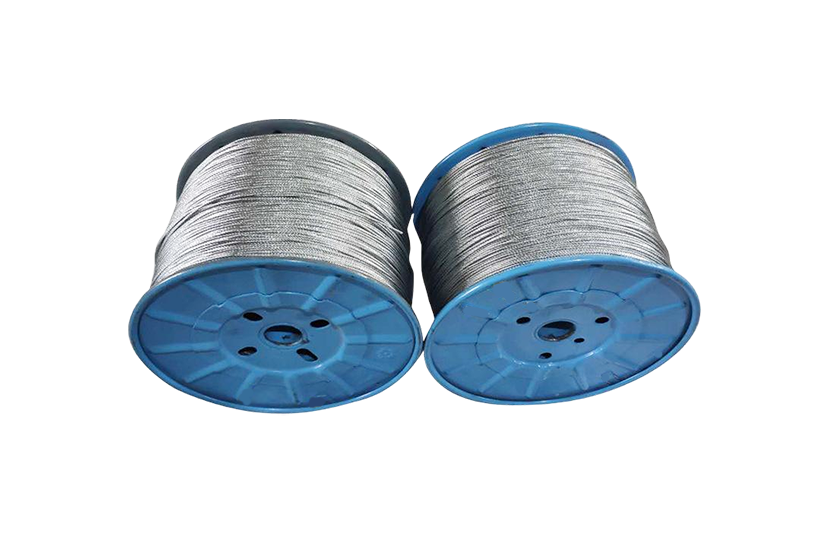
A steel wire rope is not a single metal wire but a complex flexible structure composed of thousands of individual steel wires. These wires are arranged and twisted according to specific engineering designs to achieve the required balance between strength, flexibility, and durability.
The basic structure of high tensile galvanized steel wire rope includes three main components:
| Component | Description | Function |
|---|---|---|
| Steel Wire | Individual high-carbon steel wires with zinc coating | Provides tensile strength and corrosion protection |
| Strand | A group of steel wires twisted together in a specific pattern | Distributes load and improves flexibility |
| Core | Central supporting element made from fiber core or steel core | Maintains rope shape and supports internal structure |
The combination of wire diameter, wire arrangement, strand number, rope construction, and core type determines the final performance of the wire rope.
The operating principle of high tensile galvanized steel wire rope is based on the combined load-sharing effect of multiple steel wires. When an external force is applied, the tension is distributed among individual wires and strands, allowing the rope to carry large loads while maintaining flexibility.
Unlike solid steel bars, wire ropes can bend around sheaves, drums, and pulleys because the individual wires and strands can move slightly relative to each other. This flexibility makes wire rope suitable for dynamic applications where repeated movement occurs.
The main mechanical behaviors include:
Tensile Load Transfer: Individual wires share the applied force, increasing overall load capacity.
Bending Flexibility: The stranded structure allows the rope to operate through curved paths.
Fatigue Resistance: Proper rope construction reduces damage caused by repeated bending cycles.
Corrosion Protection: The zinc coating slows oxidation and protects the steel substrate.
High tensile galvanized steel wire rope is generally manufactured from high-carbon steel wire rod. The chemical composition and processing technology directly influence the final mechanical properties of the rope.
The main material characteristics include:
High Carbon Steel: Provides high tensile strength after controlled processing.
Manganese and Silicon Elements: Improve steel strength and toughness.
Controlled Heat Treatment: Optimizes the internal structure of steel wire.
Zinc Coating: Provides sacrificial corrosion protection.
The steel wire manufacturing process usually includes drawing, heat treatment, surface cleaning, galvanizing, and final forming. Each stage affects the strength, flexibility, and durability of the finished wire rope.
Galvanizing is one of the most important technologies used in the production of corrosion-resistant steel wire rope. By applying a zinc coating to the steel wire surface, the rope gains additional protection against environmental corrosion.
Zinc protects steel through two mechanisms:
The zinc layer creates a physical barrier between the steel surface and external corrosive substances. It reduces direct contact between steel and moisture, oxygen, and chemicals.
Zinc has a higher chemical activity than steel. When corrosion occurs, zinc is preferentially consumed, protecting the steel core underneath. This process is known as sacrificial protection.

| Galvanizing Method | Process Characteristics | Typical Application |
|---|---|---|
| Hot-Dip Galvanizing | Steel wire immersed in molten zinc to form a thicker zinc coating | Marine, construction, mining, outdoor equipment |
| Electro Galvanizing | Zinc deposited through electrochemical process with smoother surface finish | Indoor equipment and mild corrosion environments |
| Heavy Zinc Coating | Increased zinc thickness for enhanced corrosion resistance | Long-term outdoor and harsh environments |
Reference: Galvanizing descriptions are based on general industrial zinc coating practices and technical principles described in international steel protection standards.
The primary feature of high tensile galvanized steel wire rope is its ability to withstand large tensile forces. High-strength steel materials allow the rope to achieve higher breaking loads compared with ordinary wire ropes of similar diameter.
This characteristic is especially important for cranes, hoisting equipment, mining systems, and heavy-duty machinery where safety factors and load capacity are critical.
The galvanized surface significantly improves corrosion resistance. This makes the product suitable for environments exposed to rain, humidity, coastal salt spray, and industrial pollutants.
Compared with Ungalvanized Steel Wire Rope, galvanized wire rope generally provides longer service intervals and reduced maintenance requirements.
Although the product provides high strength, it maintains a certain level of flexibility through optimized strand construction. This allows the rope to work efficiently in systems involving bending, winding, and repeated movement.
During operation, wire ropes experience friction, bending, and cyclic loading. Proper wire arrangement and surface treatment help improve resistance against mechanical wear and fatigue damage.
High tensile galvanized steel wire ropes can be classified according to different structural designs and application requirements.
| Classification | Examples | Main Characteristics |
|---|---|---|
| By Rope Construction | 6×19, 6×37, 8×19, 8×36 | Different balance between strength and flexibility |
| By Core Type | Fiber Core (FC), Steel Core (IWRC) | Different compression resistance and flexibility |
| By Surface Treatment | Galvanized, Heavy Galvanized | Different corrosion protection levels |
| By Application | Lifting rope, Mining rope, Marine rope | Optimized for specific working conditions |
| Product Type | Strength | Corrosion Resistance | Typical Usage |
|---|---|---|---|
| High Tensile Galvanized Steel Wire Rope | High | Excellent | Heavy lifting, cranes, outdoor engineering |
| Standard Galvanized Steel Wire Rope | Medium | Good | General lifting and mechanical applications |
| Un Galvanized Steel Wire Rope | Medium to High | Limited | Dry indoor environments |
| Stainless Steel Wire Rope | Medium | Very Excellent | Marine, chemical, decorative applications |
Reference: Performance comparison is based on general engineering characteristics of different wire rope materials and commonly applied industrial selection principles.
| Parameter | Typical Range |
|---|---|
| Material | High carbon steel wire |
| Diameter | Customized according to application requirements |
| Tensile Strength Grade | Common industrial grades include 1570 MPa, 1770 MPa, 1960 MPa and higher |
| Surface Treatment | Electro galvanized or hot-dip galvanized |
| Construction | 6×19, 6×37, 8×19, 8×36 and customized structures |
Reference: Technical ranges are based on commonly used Industrial Steel Wire rope grades and international standards including ISO 2408, EN 12385, and ASTM A1023/A1023M.
The manufacturing process of High Tensile Galvanized Steel Wire Rope involves multiple precision-controlled steps. Each stage directly influences the final tensile strength, flexibility, corrosion resistance, and service life of the finished product.
At Henan Suxiang Steel Cable Co., Ltd., we control the complete production process from raw material inspection to finished product testing. Through standardized manufacturing procedures and strict process management, we ensure stable performance for different industrial applications.
The production process begins with selecting suitable high-carbon steel wire rods. The chemical composition, surface quality, and mechanical properties of the raw material determine the basic performance of the final wire rope.
Before entering production, steel wire rods are inspected for:
Chemical composition stability
Surface defects and cleanliness
Mechanical strength requirements
Diameter accuracy
High-quality raw materials provide the foundation for producing wire ropes with consistent tensile strength and reliable durability.
Wire drawing is the process of reducing the diameter of steel wire rods through a series of drawing dies. During this process, the steel structure is gradually strengthened, improving tensile performance and dimensional accuracy.
The main objectives of wire drawing include:
Achieving accurate wire diameter
Improving surface quality
Enhancing tensile strength
Preparing steel wires for further processing
The drawing process requires precise control of drawing speed, lubrication, and reduction ratio to avoid surface damage and maintain stable mechanical properties.
After wire drawing, controlled heat treatment may be applied to optimize the internal structure of steel wire. This process improves the balance between strength and toughness.
A properly treated steel wire should have sufficient tensile strength while maintaining flexibility, allowing the final rope to withstand repeated bending and dynamic loading.
Galvanizing is a critical step in manufacturing corrosion-resistant steel wire rope. During this process, steel wires receive a protective zinc coating on their surface.
The quality of galvanizing depends on:
Zinc coating thickness
Surface preparation before coating
Zinc adhesion performance
Coating uniformity
A uniform zinc coating improves resistance against moisture, oxidation, and environmental corrosion, making galvanized wire rope suitable for outdoor and harsh working conditions.
After galvanizing, individual steel wires are twisted together to form strands. The arrangement of wires inside each strand affects rope flexibility, contact pressure, and fatigue resistance.
Different constructions are selected according to application requirements:
6×19 Construction: Balanced strength and flexibility, widely used in general lifting applications.
6×37 Construction: More wires per strand, offering better flexibility.
8×19 Construction: Suitable for applications requiring smooth operation and bending performance.
IWRC Construction: Steel core design provides higher strength and compression resistance.
The final rope forming process combines multiple strands around the core. Proper closing technology ensures that the rope maintains stable geometry and load distribution.
Lubrication is applied to reduce friction between wires and strands. It helps minimize internal wear and improves fatigue resistance during repeated operation.
Before shipment, finished wire ropes undergo inspection according to production requirements. Products are checked for appearance, dimensions, mechanical properties, and packaging protection.
For international transportation, we use suitable packaging methods to protect against:
Moisture exposure
Surface damage
Deformation during transportation
Rust risks caused by improper storage
The performance of a wire rope cannot be judged only by appearance. Professional testing is required to verify whether the product meets engineering requirements.
Important quality tests include:
The tensile test measures the maximum force that the wire rope can withstand before failure. This value is an important reference for selecting wire rope according to working load requirements.
Breaking load testing evaluates the ultimate strength of the finished wire rope. It helps confirm whether the rope meets the designed safety requirements.
The zinc coating test checks coating thickness, adhesion, and uniformity. Proper galvanizing quality ensures long-term corrosion protection.
Accurate diameter control is important because it affects compatibility with pulleys, drums, and mechanical systems.
For dynamic applications, wire rope must withstand repeated bending cycles. Fatigue performance evaluation helps determine suitability for cranes, elevators, and mechanical equipment.
| Testing Item | Purpose | Influence on Application |
|---|---|---|
| Tensile Strength Test | Measure load-bearing capability | Ensures safe operation under working loads |
| Breaking Load Test | Verify maximum strength | Confirms structural reliability |
| Zinc Coating Test | Evaluate corrosion protection | Determines outdoor durability |
| Dimension Inspection | Check diameter accuracy | Ensures equipment compatibility |
Reference: Testing methods are commonly based on international wire rope standards, including ISO 2408, EN 12385 series, and ASTM A1023/A1023M.
Cranes require wire ropes with high breaking strength, fatigue resistance, and reliable operation. High tensile galvanized steel wire rope is commonly used in tower cranes, mobile cranes, gantry cranes, and port cranes.
The galvanized surface provides additional protection for equipment operating outdoors, while the high tensile structure supports heavy lifting operations.
Mining equipment often operates under heavy loads and harsh environmental conditions. Wire ropes are used in mine hoists, material transportation systems, and underground lifting equipment.
High Tensile Galvanized Wire Rope helps improve operational stability and reduce replacement frequency in demanding environments.
Port machinery and marine equipment require corrosion-resistant materials due to constant exposure to humidity and salt spray.
Applications include:
Port cranes
Ship lifting systems
Marine platforms
Cargo handling equipment
Construction projects use wire ropes for lifting, pulling, and supporting functions. The product is suitable for construction elevators, hoisting systems, and engineering machinery.
Wind power and renewable energy projects require reliable steel cable components for installation, maintenance, and support structures.
Galvanized steel wire rope provides long-term outdoor performance under changing weather conditions.
Selecting a suitable wire rope requires considering the actual operating environment rather than only choosing the highest strength grade.
The first consideration is the maximum working load. The selected rope should provide sufficient safety margin based on equipment requirements.
Environmental conditions determine the required corrosion protection level.
Indoor environment: Standard galvanized rope may be sufficient.
Outdoor environment: Higher zinc coating is recommended.
Marine environment: Heavy corrosion protection is preferred.
Different constructions provide different performance characteristics:
| Construction | Performance Feature | Recommended Application |
|---|---|---|
| 6×19 | Good balance of strength and flexibility | General lifting equipment |
| 6×37 | Higher flexibility | Equipment requiring frequent bending |
| IWRC | Higher strength and compression resistance | Heavy-duty machinery |
Proper storage and maintenance can significantly extend the service life of galvanized steel wire rope.
Store wire ropes in a dry and ventilated area.
Avoid direct contact with water or corrosive chemicals.
Inspect rope condition regularly during operation.
Apply suitable lubrication when required.
Replace ropes when serious wear, deformation, or broken wires appear.
Henan Suxiang Steel Cable Co., Ltd. specializes in the research, development, production, and supply of high-performance steel wires and steel cables.
Our product range includes:
High Tensile Galvanized Steel Wire Rope
Galvanized Steel Wire Rope
Phosphating Steel Wire
Spring Steel Wire
Special Steel Wire Products
Steel Cable Solutions
We have established a technology development system focused on corrosion-resistant and high-performance steel wire products. The company owns multiple technology patents and participates in industry technical development related to flexible ultra-wear-resistant high-tensile steel wire ropes.
Through standardized production management, quality inspection systems, and customized service capability, we provide reliable steel wire rope products for construction, mining, transportation, machinery, energy, and engineering industries.
High tensile galvanized steel wire rope uses stronger steel materials and provides zinc corrosion protection. It offers higher breaking strength and better outdoor durability compared with ordinary wire rope.
Service life depends on working load, environment, maintenance, and usage frequency. Proper selection and maintenance can significantly extend operating life.
Yes. Galvanized wire rope provides better corrosion resistance than untreated steel rope and is widely used in port and marine applications. For severe saltwater environments, higher protection levels may be selected.
Yes. Manufacturers can customize diameter, construction, tensile strength, zinc coating requirements, length, and packaging according to customer application needs.
Common standards include ISO 2408, EN 12385 series, and ASTM A1023/A1023M, depending on market requirements and application conditions.
High Tensile Galvanized Steel Wire Rope is an advanced load-bearing component designed for applications requiring high strength, corrosion resistance, and long-term reliability. Through optimized steel selection, precision manufacturing, galvanized protection, and strict quality control, it provides stable performance in demanding industrial environments.
As a professional steel wire and cable manufacturer, Henan Suxiang Steel Cable Co., Ltd. continues to improve product technology and manufacturing capability, providing customized galvanized steel wire rope solutions for customers worldwide.

 Landline Phone: +86-513-85100011
Telephone: +86 13585223056
 E-mail: hangtong@nthangtong.com
vicky@nthangtong.com
 Address: No. 508, Guangxing Road, Baishan Town, Bo'ai County, Jiaozuo City, Henan Province
Copyright © Henan Suxiang Steel Cable Co., Ltd
This website uses cookies to ensure you get the best experience on our website.
 Español
 한국어
한국어 العربية
 Tiếng Việt
 Filipino



 Phone
Phone