Heavy Duty Galvanized Steel Wire Rope: Complete Technical Guide to Structure, Performance, and ApplicationsHeavy Duty Galvanized Steel Wire Rope is a high-performance mechanical component designed for applications that require high load capacity, corrosion resistance, durability, and reliable operation under demanding conditions. It is widely used in lifting equipment, cranes, mining machinery, marine engineering, construction systems, transportation facilities, and industrial equipment.
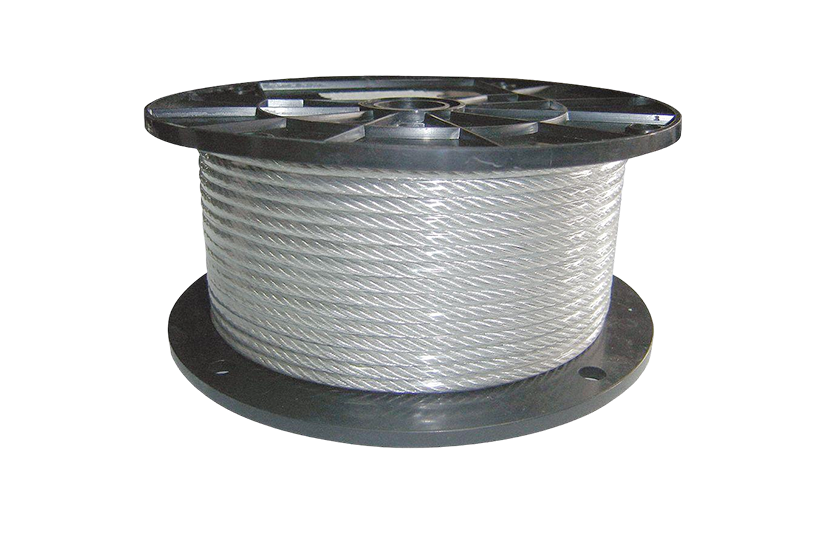
Unlike ordinary steel cables, Heavy Duty Galvanized Steel Wire Rope combines a high-strength steel structure with a protective zinc coating. This combination allows the wire rope to withstand heavy loads while reducing corrosion damage caused by moisture, weather exposure, and industrial environments.
In engineering applications, wire rope selection is not only based on breaking strength. Factors such as rope construction, steel grade, coating method, working load, bending frequency, operating temperature, and environmental conditions all influence the actual performance and service life of the product.
Heavy Duty Galvanized Steel Wire Rope is a flexible load-bearing cable manufactured by twisting multiple steel wires into strands and combining several strands around a central core. Each individual wire contributes to the overall strength of the rope, allowing the final structure to carry large tensile forces while maintaining flexibility.
The term “heavy duty” refers to wire ropes designed for more demanding working conditions. Compared with standard wire rope products, heavy duty versions typically feature higher tensile strength, stronger wear resistance, improved fatigue performance, and enhanced durability.
The galvanized surface treatment is an important characteristic. During galvanizing, a layer of zinc is applied to the steel wire surface. The zinc coating works as a protective barrier, reducing direct contact between steel and corrosive elements such as water, oxygen, and industrial pollutants.
Because of these characteristics, heavy duty galvanized steel wire rope is commonly selected for applications where failure could lead to equipment downtime, safety risks, or high maintenance costs.
2. Basic Structure of Heavy Duty Galvanized Steel Wire Rope
The performance of a wire rope depends heavily on its internal construction. A complete heavy duty galvanized steel wire rope usually consists of three main parts: individual wires, strands, and a core.
2.1 Steel Wires
Steel wires are the smallest structural units of the rope. They are produced through wire drawing processes that reduce the diameter of steel rods while improving strength and dimensional accuracy.
The mechanical properties of individual wires directly influence the final rope performance. Important characteristics include tensile strength, hardness, surface quality, and resistance to repeated stress.
2.2 Strands
Several steel wires are twisted together to form a strand. Multiple strands are then arranged around a core to create the finished wire rope.
The design of the strands affects flexibility, contact pressure, bending performance, and fatigue resistance. Different strand structures are selected depending on whether the application requires higher strength or greater flexibility.
2.3 Core
The core is located at the center of the wire rope and supports the surrounding strands. It helps maintain the rope shape and improves structural stability during operation.
Common core types include:
Fiber Core (FC): Provides better flexibility and is suitable for general applications.
Independent Wire Rope Core (IWRC): Provides higher strength and better resistance to crushing.
Steel Core: Used for heavy load applications requiring greater structural support.
3. Working Principle of Heavy Duty Galvanized Steel Wire Rope
The working principle of heavy duty galvanized steel wire rope is based on load distribution among multiple steel wires. Instead of carrying force through a single solid section, the rope transfers tension through thousands of interconnected wires.
When a load is applied, each strand shares part of the force. This structure allows the rope to achieve high breaking strength while maintaining the flexibility required for movement around pulleys, sheaves, and drums.
During operation, the wire rope experiences several types of stress:
Tensile stress caused by lifting or pulling loads
Bending stress caused by movement through sheaves and drums
Contact stress caused by friction between wires
Environmental stress caused by corrosion factors
A well-designed heavy duty galvanized wire rope balances these different stresses through proper material selection, rope construction, and surface protection.
4. Material Characteristics of Heavy Duty Galvanized Steel Wire Rope
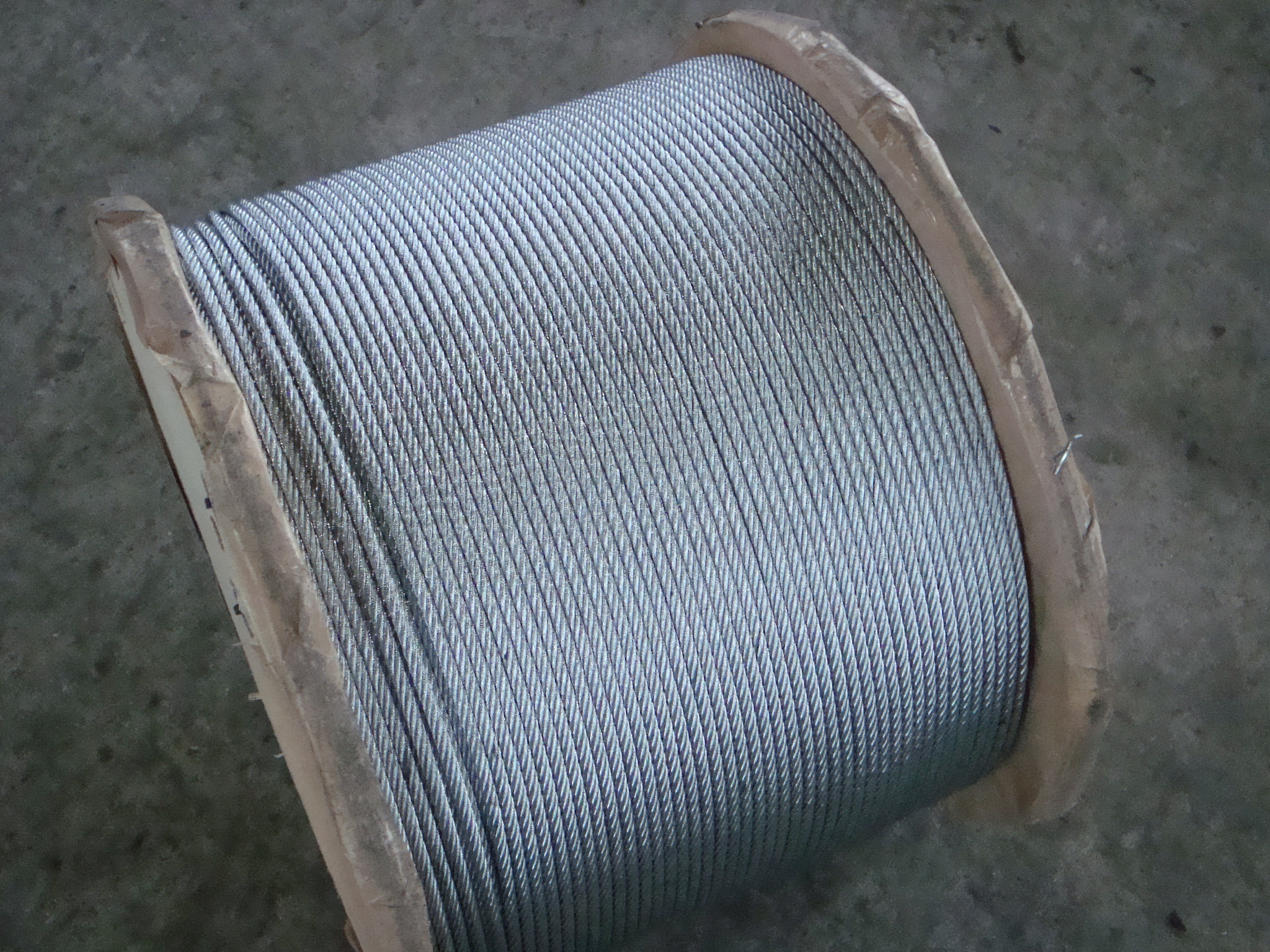
The performance of galvanized steel wire rope mainly depends on the quality of steel material and surface treatment technology.
4.1 High Carbon Steel Material
Most heavy duty wire ropes use high carbon steel because it provides a combination of high tensile strength and acceptable flexibility.
High carbon steel allows the rope to withstand significant pulling forces while maintaining the mechanical properties required for industrial operation.
4.2 Tensile Strength
Tensile strength represents the maximum force a wire rope can withstand before failure. Heavy duty galvanized steel wire ropes are designed with higher tensile performance compared with general-purpose cables.
Higher tensile strength allows smaller diameter ropes to carry equivalent loads in some applications, helping reduce equipment weight and installation space.
4.3 Corrosion Resistance
Steel naturally reacts with oxygen and moisture, creating corrosion over time. The zinc coating on galvanized wire rope provides additional protection by preventing direct exposure of steel to the environment.
This makes galvanized steel wire rope suitable for outdoor applications, coastal environments, and industrial areas with high humidity.
4.4 Wear Resistance
During operation, wire ropes experience friction from pulleys, drums, and contact surfaces. Wear resistance directly affects service life.
Heavy duty designs usually focus on improving surface durability and reducing damage caused by repeated mechanical contact.
5. Galvanizing Technology and Corrosion Protection Mechanism
Galvanizing is one of the most widely used corrosion protection methods for steel products. In galvanized steel wire rope production, zinc is applied to the steel surface to create a protective layer.
5.1 How Zinc Coating Protects Steel
The protection mechanism of zinc includes two functions:
Barrier protection: The zinc coating separates steel from moisture and oxygen.
Sacrificial protection: Zinc corrodes preferentially before steel, protecting exposed areas.
This protection method helps extend the service life of wire rope in environments where corrosion is a major concern.
5.2 Common Galvanizing Methods
| Galvanizing Method | Main Feature | Typical Application |
|---|
| Electro Galvanizing | Uniform and smooth zinc coating | Indoor and general industrial applications |
| Hot-Dip Galvanizing | Thicker zinc layer with stronger corrosion protection | Outdoor, marine, construction applications |
| Uncoated Steel Surface | No additional corrosion protection | Dry environments with low corrosion risk |
Source: General galvanizing characteristics are based on industrial corrosion protection principles and steel coating engineering practices.
6. Performance Comparison of Different Wire Rope Types
| Wire Rope Type | Strength Level | Corrosion Resistance | Flexibility | Main Applications |
|---|
| Standard Steel Wire Rope | Medium-High | Low | Medium | Indoor lifting equipment |
| Heavy Duty Galvanized Steel Wire Rope | High | High | High | Cranes, mining, marine, heavy machinery |
| Stainless Steel Wire Rope | Medium | Very High | Medium | Chemical, food, special environments |
Source: Comparison based on ISO 2408 Steel Wire Ropes — Requirements and common industrial application characteristics.
7. Key Advantages of Heavy Duty Galvanized Steel Wire Rope
High Load Capacity: Designed for heavy lifting and high tension applications.
Improved Corrosion Resistance: Zinc coating helps protect steel from environmental damage.
Long Service Life: Strong materials and protective coating reduce replacement frequency.
Flexible Operation: Suitable for systems involving bending and repeated movement.
Wide Application Range: Used across construction, mining, marine, transportation, and industrial fields.
8. Manufacturing Process of Heavy Duty Galvanized Steel Wire Rope
The manufacturing process of Heavy Duty Galvanized Steel Wire Rope involves multiple controlled stages to achieve the required balance between strength, flexibility, corrosion resistance, and service life. Each production step influences the final mechanical performance of the wire rope.
A high-quality wire rope is not created only by using strong steel materials. The accuracy of wire processing, quality of galvanizing, consistency of rope construction, and final inspection all determine whether the product can perform reliably in demanding applications.
8.1 Raw Material Selection
The manufacturing process begins with selecting suitable steel wire rods. High carbon steel is commonly used because of its excellent tensile strength and fatigue resistance.
The chemical composition of steel affects important properties such as hardness, strength, ductility, and corrosion performance. Proper material selection provides a stable foundation for producing heavy duty steel wire rope.
8.2 Wire Drawing Process
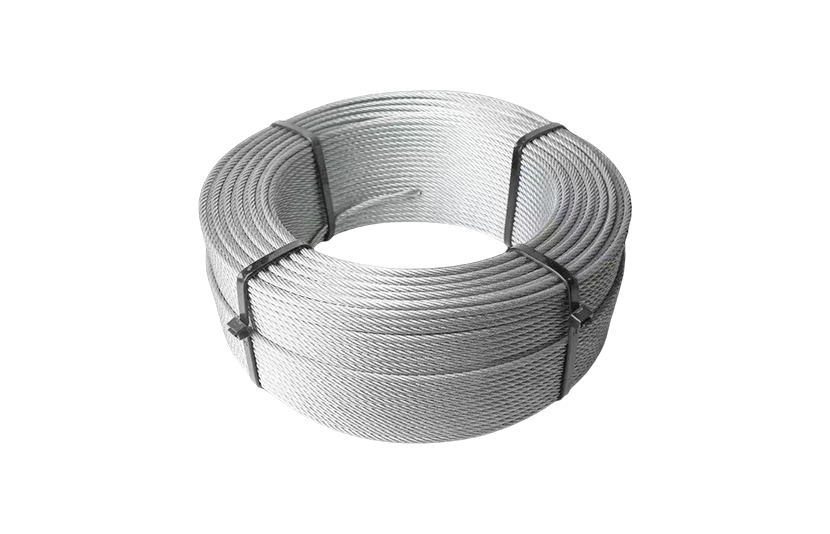
Wire drawing is a process that reduces the diameter of steel rods through a series of dies. During this process, the steel wire becomes thinner while its strength characteristics are improved.
Precise control of wire diameter is essential because uneven wire dimensions may lead to unbalanced load distribution inside the finished rope.
Important parameters during wire drawing include:
8.3 Heat Treatment Process
Heat treatment is used to optimize the internal structure of steel wire. This process improves the balance between strength and flexibility.
For heavy duty applications, the wire must be strong enough to support large loads while remaining flexible enough to withstand repeated bending.
8.4 Galvanizing Process
After wire processing, the steel wires undergo galvanizing treatment. A zinc coating is applied to the surface to improve corrosion resistance.
The quality of galvanizing affects the long-term performance of galvanized steel wire rope, especially in outdoor, marine, and industrial environments.
Key factors include:
8.5 Strand Formation
Individual steel wires are twisted together to form strands. The number of wires and arrangement method influence the final rope characteristics.
Different strand designs provide different advantages:
8.6 Rope Closing Process
During rope closing, multiple strands are twisted around the core to create the final wire rope structure.
The rope closing process requires accurate control of:
Twisting direction
Lay length
Strand tension
Final rope diameter
Proper rope formation ensures that each strand shares the load evenly during operation.
8.7 Final Inspection
Before use, heavy duty galvanized steel wire rope requires inspection to verify mechanical and physical properties.
Common inspection items include:
Diameter measurement
Tensile strength testing
Zinc coating inspection
Visual surface examination
Rope structure verification
Length and packaging inspection
9. Common Construction Types of Heavy Duty Galvanized Steel Wire Rope
Wire rope construction refers to the arrangement of wires and strands inside the rope. Different constructions provide different combinations of strength, flexibility, and durability.
9.1 6×19 Construction
The 6×19 construction contains six strands with nineteen wires per strand. It provides a balance between strength and flexibility.
This type is commonly used in general lifting applications, cranes, and mechanical equipment.
9.2 6×37 Construction
The 6×37 construction contains more individual wires, creating a more flexible rope structure.
It is suitable for applications requiring frequent bending, such as hoisting systems and moving machinery.
9.3 7×19 Construction
The 7×19 structure provides excellent flexibility and is often used in applications where the rope must pass through pulleys repeatedly.
Typical applications include control cables, winching systems, and mechanical transmission equipment.
9.4 Steel Core Construction (IWRC)
Independent Wire Rope Core (IWRC) structures provide improved strength and resistance to crushing compared with fiber core designs.
They are widely used in heavy lifting applications where the rope experiences high pressure, large loads, or repeated operation.
10. Application Fields of Heavy Duty Galvanized Steel Wire Rope
Heavy duty galvanized steel wire rope plays an important role in many industries because it provides a combination of strength, flexibility, and corrosion protection.
10.1 Port and Marine Equipment
Ports and marine environments expose equipment to moisture and salt spray. Galvanized steel wire rope is commonly used in:
Port cranes
Ship lifting systems
Offshore platforms
Marine winches
Cargo handling equipment
10.2 Mining Industry
Mining operations require components that can withstand heavy loads and continuous working cycles.
Applications include:
10.3 Construction Engineering
Construction projects use heavy duty lifting wire rope in cranes, elevators, suspension systems, and heavy machinery.
The corrosion-resistant surface helps maintain performance in outdoor environments.
10.4 Energy and Infrastructure Projects
Steel wire rope is also used in power facilities, bridge engineering, renewable energy equipment, and large mechanical structures.
Long service life and reliable mechanical performance are important factors in these applications.
11. How to Select the Right Heavy Duty Galvanized Steel Wire Rope?
Choosing the correct wire rope requires considering the complete operating environment rather than only selecting the strongest product.
| Selection Factor | Key Consideration | Performance Influence |
|---|
| Rope Diameter | Match equipment design and load requirements | Affects strength and bending performance |
| Construction Type | Select according to movement frequency | Influences flexibility and fatigue life |
| Core Type | Choose fiber core or steel core based on load | Affects crushing resistance and stability |
| Surface Treatment | Consider corrosion environment | Determines protection capability |
Source: Selection principles are based on ISO 2408 Steel Wire Ropes — Requirements and general mechanical engineering practices.
12. Maintenance and Service Life Factors
Even high-quality wire rope requires proper maintenance to achieve its expected service life. Regular inspection helps identify early signs of damage and improves operational safety.
Regular Inspection
Common inspection points include:
Broken wires
Corrosion areas
Diameter reduction
Permanent deformation
Lubrication condition
Proper Lubrication
Lubrication reduces friction between wires and strands. It helps decrease wear caused by repeated movement.
Avoiding Overloading
Operating beyond the recommended working load accelerates fatigue damage and reduces service life.
13. Technical Specification Reference
| Parameter | Description |
|---|
| Product Name | Heavy Duty Galvanized Steel Wire Rope |
| Main Material | High Carbon Steel |
| Surface Treatment | Zinc Galvanized Coating |
| Strength Characteristics | High tensile strength and load capacity |
| Main Performance | Corrosion resistance, wear resistance, flexibility, durability |
| Typical Structures | 6×19, 6×37, 7×19, IWRC constructions |
| Applications | Lifting, cranes, mining, marine, construction equipment |
Source: Technical characteristics are based on general steel wire rope standards and industrial application requirements.
14. Frequently Asked Questions About Heavy Duty Galvanized Steel Wire Rope
Q1: Why choose galvanized steel wire rope instead of ordinary steel wire rope?
Galvanized steel wire rope provides additional corrosion protection through zinc coating. It is more suitable for outdoor and humid environments where untreated steel may corrode faster.
Q2: Is heavy duty galvanized steel wire rope suitable for cranes?
Yes. It is widely used in cranes and lifting equipment because of its high tensile strength, durability, and ability to withstand repeated loading.
Q3: What factors affect the service life of galvanized wire rope?
Service life depends on working load, bending frequency, environment, installation method, lubrication, and maintenance practices.
Q4: What is the difference between galvanized steel wire rope and galvanized steel cable?
The terms are sometimes used interchangeably. In industrial applications, “wire rope” usually refers to a multi-wire structure designed for mechanical load-bearing, while “steel cable” can describe a broader range of steel cable products.
Q5: How should heavy duty wire rope be stored?
Wire rope should be stored in a dry environment, protected from moisture, chemicals, and physical damage. Proper storage helps maintain surface condition before installation.
Conclusion
Heavy Duty Galvanized Steel Wire Rope is an essential engineering material that combines high mechanical strength with corrosion protection. Its multi-wire structure provides flexibility, while galvanized coating improves durability in challenging environments.
Understanding the construction, manufacturing process, performance characteristics, and selection methods helps engineers and buyers choose the correct wire rope for different industrial applications.
From heavy lifting and mining operations to marine equipment and infrastructure projects, galvanized steel wire rope remains a reliable solution for applications requiring safety, strength, and long-term performance.

 Español
 한국어
한국어 العربية
 Tiếng Việt
 Filipino


 E-mail:
  Address: No. 508, Guangxing Road, Baishan Town, Bo'ai County, Jiaozuo City, Henan Province



 Phone
Phone